Category: Nezaradené

Daniel from Ethiopia joined us for the architects’ residency
Daniel from Ethiopia joined us as part of the architects’ residency program that we are preparing in Malý Berlin. In the interview, he shared his feelings about his stay in Slovakia, the work he did with us, and the experiences that the residency brought him.
Dani, first of all, I would like to ask what the residency at Malý Berlín gave you, especially from a professional point of view.
First and foremost, I am truly honored to have been a resident at Maly Berlin for the past three months, starting in October. I can confidently say that this experience represents one of the key turning points in my professional path. I am an architect by profession, and the open call was focused on the adaptation of landscape design in response to climate change. Therefore, the work mainly emphasized landscape and greenery, while also requiring a strong understanding of urban design principles. This approach allowed me to engage deeply with the city’s landscape and to broaden my perspective as an architect. Moreover, being immersed in a new cultural and contextual environment opened my eyes to how design problems are addressed differently across contexts, which is an essential and valuable skill for an architect.
How did you adapt to Slovakia and to Trnava?
As someone encountering Europe for the first time, the early days were a bit challenging for me, both in adapting to the climate and to the people. The Global South, where I come from, is characterized by a relatively hot climate and a highly connected social life. In contrast, I initially found Slovak people somewhat reserved, and the period when I arrived was particularly cold. However, thanks to the team at Maly Berlin, who were welcoming and supportive, I was able to adapt to the city more easily. As time went on, I got to know more people through the events organized at Maly Berlin, which helped me feel increasingly at home. Regarding the climate, I invested in proper winter clothing, which, admittedly, made me look bigger in picture. My mom thought I gained some weight. Over time, I began to truly enjoy my stay in Trnava, and I can say that my residency concluded at its peak, just as I had fully adapted to the Slovak context. Which is a bit sad ofc.
How long did it take you to decide whether you would actually come to Slovakia in the end?
When I first received the email informing me that I had been awarded the residency, I was genuinely surprised, as I had not expected it at all. At the time, I was visiting my family since the Ethiopian New Year was approaching, yet I did not hesitate to decide to come to Slovakia. I immediately began processing my visa and wrapped up my personal projects at home. I even spent the holiday away from my family in order to complete the visa process in Kenya.

Tell us more about yourself, your work, and your career. What did you study, and which interesting projects have you been involved in in the past?
I come from Ethiopia, a country located in East Africa. I am an architect and have been active in the professional industry since 2021. I studied Architecture at Addis Ababa University for five years and graduated with high honors. Since then, I have been involved in projects ranging from small to large scale in Ethiopia, as well as in several international competitions across different continents.
I began my early career at Alebel Desta Consulting Architects, based in Addis Ababa. My first project with the team was an international competition to design a memorial landscape project for the Boeing 737 crash in 2019. I learned a great deal from this project, and it further inspired me to engage in international competitions. From then on, my partner and I at the office started participating in several competitions, and recently we won a school design competition in Palestine, which brought us both international and national recognition. Although I have been involved in various projects, these two projects are particularly crucial and meaningful to me.
What was your stay at Malý Berlín actually about? What exactly did you work on while you were here?
My stay at Maly Berlin focused on the adaptation of Trnava’s greenery to climate change. The concept of climate change is, of course, very broad; however, our work specifically concentrated on water-sensitive urban landscapes. The city of Trnava is characterized by a scarcity of natural water resources and is currently facing challenges in maintaining urban greenery due to high water consumption. Therefore, together with the city administration, we analyzed existing green areas in selected locations and proposed solutions to make urban greenery less water-demanding.
The assignment mainly focused on identifying and analyzing existing conditions and proposing plant species that require lower water input and can thrive in low waster input environments. In addition, we studied possible policies and strategies adopted by other international cities in relation to water-sensitive landscape design. We are also planning to further develop this project and aim to realize it through the construction of an actual prototype park.
What goals did you have before the residency? Did you manage to achieve them?
Before starting my residency, I set several goals for myself. Besides completing the residency, I aimed to explore at least ten cities and build as many professional connections as possible. I believe I achieved most of these goals, as I visited five different countries during my stay and had the opportunity to see their capital cities. Thanks to the people at the municipality, I was able to meet professionals in person and conduct several interviews with them. Overall, I can say that I almost achieved all of the goals I had set for myself.
You presented your work to audiences at Malý Berlín several times. What was that experience like?
Before Maly Berlin, I can say that I had never given a public presentation. For my first presentation, I did several rehearsals, thinking it would be a very serious event. However, I found the atmosphere to be extremely friendly, and the audience was highly engaged. People were open to asking questions, and their positive feedback was truly inspiring. It was also the first time I met new people outside the staff of Maly Berlin.
What surprised me the most was that people from different backgrounds showed interest and attended the event. I initially thought that only architects or artists would come to the presentation, but the majority were not from these fields. I truly appreciated their perspectives on architecture and on my work, as it allowed me to see my projects through a broader and more diverse lens.

Did you establish new professional contacts in Trnava?
Yes, I established new professional connections in Trnava thanks to the people from the city administration and to some friends I came to know during my stay. I also managed to visit architectural studios in Bratislava, where I had one-on-one conversations with practicing architects. In addition to this, I met several highly inspiring artists. During my first presentation, which took place at a PechaKucha night, I had the chance to connect with many talented creatives. I still remember having a long conversation with an installation artist that lasted until midnight, and the wine was good. Meeting such people was truly inspiring, as it encouraged me to push myself beyond my usual boundaries.
What did your stay in Slovakia give you, and what are you taking away from it?
For me, one of the major takeaways from my residency in Slovakia was learning how to adapt to a new culture and context. I had never been outside my country before this residency, so it was my first experience of adjusting to a new place and new people. I can say that this experience made me fall in love with discovering new places and engaging with different cultures.
Another important takeaway from my stay was realizing that most of the people I met have a strong appreciation for quality of life. They are curious about other cultures, passionate about music and art, and, most importantly, very positive and open when approached. In addition, my stay in Slovakia allowed me to better understand what living in Europe looks like, and how cities and systems are designed to support comfortable and balanced everyday life.
You also attended some events at Malý Berlín. Which one interested you the most?
Among the events I attended at Maly Berlin, I especially enjoyed the PechaKucha night. One of the reasons was the large and diverse audience, where many creative professionals presented their work to the public. It was truly a great networking event, and I found myself wishing that similar events existed back home. During the night, presenters shared their work through a format of 20 slides, each shown for one minute. I was particularly amazed by the works of illustrators, landscape architects, and musicians. And of course, I loved the wine, it made the night even more memorable.
I know that you often travelled to Vienna. Why did you choose that city in particular?
My attachment to Vienna began unexpectedly. Just a week after arriving in Slovakia, I traveled to Vienna out of curiosity to see what the city was like. After sharing some posts online about my stay in Vienna, I discovered that one of my friends was living there as an exchange student. She had been a colleague at my previous office, and she later introduced me to the Ethiopian community in Vienna. I was genuinely surprised by how welcoming and hospitable the Ethiopian community there was.
Not only did I get to know them, but I also began spending my Saturday nights at one Ethiopian family’s apartment. Other friends would join us, and we often spent Saturday nights past midnight talking, debating, and enjoying ourselves. On Sundays, I attended the Ethiopian church and returned to Trnava in the afternoon. Throughout my stay, I visited Vienna almost every weekend. To this day, my time in Vienna remains deeply memorable and truly felt like home, and saying goodbye at the end of my residency was especially difficult.

Tell us more about what you experienced in Slovakia – do you have any unexpected, interesting, or funny stories?
My stay in Slovakia became more interesting as time went on. The first couple of weeks were mainly about getting to know Trnava and Bratislava, identifying stations, routes, and basic places around the cities. Then the municipality provided me with a bicycle, and that day I was so excited that I stopped my work and went for a long ride around the city. From then on, whenever I felt overworked, I would take the bike and explore Trnava. I can say that I covered most corners of the city. I even took my bike to Bratislava and Vienna to explore the cities, which I truly enjoyed.
Moreover, the friends I made in Trnava introduced me to new places, and we spent quality time together. One of the funniest experiences during my stay was getting lost on the train. I once traveled to Nové Zámky, a city about an hour and a half from Trnava, with colleagues from Maly Berlin. On my way back, I did not realize that the railway line was under maintenance and that there was no direct train to Trnava. I was supposed to get off at a station and continue part of the journey by bus, but I missed that stop and ended up traveling in the wrong direction. I could not find anyone who spoke English, and my mobile data had run out. I returned and repeated the same mistake, once again heading in the wrong direction.
For the third time, I came back and finally met an Indian man who was also trying to get to Trnava. I felt confident that I would make it home, but we ended up getting lost together in yet another direction. After nearly six hours of traveling, switching trains, and changing stations, I finally returned to my apartment. Each of those three wrong turns had its own funny story, and when we eventually arrived in Trnava, the Indian man and I laughed together about all the mistakes we had made along the way.
How would you sum up your experience here in one sentence?
I asked myself this question as well and could not find a better way to express it in a single sentence. However, if I had to summarize my experience, I would say: “My time in Trnava was like falling in love with your high school crush for the first time.” From the very beginning, I fell in love with Trnava, and each day and each week of my stay was memorable and full of new experiences. Although it lasted only three months, it felt like a lifetime and I find myself thinking about Trnava from time to time. I sincerely hope that I will have the chance to visit the city again.
Do you have any last words?
I have so many agents to thank here. First, I want to thank God for guiding me throughout this entire process. And secondly, without the support of my family, who have always encouraged my activities, I may not have made it this far. Most importantly, I would like to express my sincere gratitude to Maly Berlin for giving me this opportunity. I truly felt at home during my stay there. Last but not least, I would like to thank the Ethiopian community in Vienna and my friends back home for their constant support and encouragement.
Ján Janočko
Photo: Lívia Martvoňová

He combined sports and art. Resident Željko Beljan revived the playground and made several board games
In Malý Berlín, sport and art sometimes converge. During a three-month residency, we welcomed Željko Beljan, a Croatian artist who creates sports-themed games and reanimates rundown football pitches, among other things. Read our interview to find out more about him and his work.
Why did you decide to apply for the open call in Trnava? What aspects of the open call and this opportunity captured your interest?
I applied for the Trnava residency because it perfectly aligns with my practice. The focus on fine arts and large-scale works, combined with the chance to engage with the local community, resonates with my ongoing exploration of handicraft, sport, and collective experiences. Having previously collaborated with Culture Hub Croatia, I trusted the quality of the residency. Trnava’s vibrant arts scene, strong sports culture, and the support offered by Malý Berlín made this opportunity especially compelling, giving me the space and resources to develop work that is both ambitious and contextually engaged.
Do you integrate sport and art in your work? How, in your opinion, do these two seemingly disparate components coexist?
Yes, sport is one of the recurring themes in my work. I’m interested in amateur, grassroots sports and the communal spirit around them. I combine this with handicraft — woodworking, knotting, and hand-built games. Art and sport coexist in my practice through play: the shared rules, improvisation, physicality, and the social environment that both disciplines create. I don’t approach sport literally, but instead translate its dynamics and emotions into objects and participatory situations.

Which artists inspire you? Whose work do you find particularly interesting?
I’m inspired by artists who blur the boundaries between disciplines — those who work with play, participation, craft, or community engagement. I follow practices that emphasize process over perfection, and works that invite audiences to interact rather than simply observe. I also appreciate artists who work with found materials or who operate on the edge of design, folk tradition, and contemporary art.
Tell us more about what you did in Croatia. Do you have your favourite project?
In Croatia I’ve worked on various projects that combine sports, craft, and participatory elements. One ongoing project is 3 Corners = 1 Penalty, where I knot football nets by hand and activate local playgrounds through communal events and matches. I also build handmade wooden games inspired by sports, mostly from repurposed materials. If I had to choose a favourite, I’d say the projects that involve public space and local communities — they tend to create the most meaningful connections.
Your projects often aim for collaboration and cooperation with the local community. How did your collaboration with the people of Trnava proceed?
It happened very naturally. While knotting the nets at the concrete pitch, many kids and neighbors stopped by, curious, supportive, and eager to understand what was going on. Despite the language barrier, football provided a universal way to communicate. A local neighbor, David, played a big part by helping with translation and spreading the word. This openness made the collaboration easy and enjoyable.

What was the concept of your project, and were you able to fulfill it?
The concept was to connect craft and sport through a site-specific intervention and a series of handmade games. The football nets were created as both functional objects and artistic gestures, while the wooden games explored playfulness and interaction. Not only was I able to fulfill the concept, the project grew organically thanks to the community’s engagement.
What challenges did you encounter while working on the project?
The main challenge was the language barrier when talking with kids and neighbors, but somehow football always solves that. Sometimes weather conditions slowed down outdoor work, and working with found/reused materials can be unpredictable, but I actually enjoy those limitations, they shape the process.
What did you like the most about Trnava or Slovakia?
I really enjoyed the atmosphere of the city, calm but full of life. The sports culture, especially football, felt very genuine. People were open, curious, and welcoming. And I appreciated the mix of historical architecture and contemporary initiatives happening around the city.
Did you manage to meet with the local art scene? If so, with whom?
Yes, I had the chance to meet the team at Malý Berlín and several local artists and cultural workers through the residency. I also spent time at Kubik community center, where I met people who are actively involved in Trnava’s cultural scene. The exchanges were informal but meaningful, giving me insight into how local artists combine community engagement with creative practice.


Did you get to know the local art? What did you like the most about it?
Yes, I really enjoyed exploring the local art and cultural scene. What stood out most was its openness and sense of community. I attended concerts and events at Kubik, joined Pride in Trnava organized by Status Queer, and experienced the supportive and collaborative environment at Malý Berlín. I also received small gestures of generosity, like Kočo and Alica from Risko Print creating a collector-style football card edition for my open studio, which felt very personal and welcoming. Overall, the combination of professionalism, warmth, and creativity made the local art scene very inspiring.
Did you find a favourite place in Trnava? Perhaps a place that inspired you?
The small concrete football pitch on Andreja Kubinu Street became very special to me. Spending time there while knotting the nets allowed me to observe daily life, meet local people, and understand the rhythm of the neighborhood. It became both a workspace and a source of inspiration.
What are your future artistic plans?
I plan to continue developing projects that merge craft, sport, and participatory practices. I’d like to explore more public spaces and work with communities in different countries. I’ve already applied for another residency in Slovakia, so there’s a chance I’ll return to deepen this connection.
What was your favourite thing about residency in Trnava, and would you recommend it to other artists?
My favourite aspect of the residency was the opportunity to engage with Trnava’s local community. I really appreciated the openness, creativity, and generosity of the people I met, from artists and cultural workers to community members at Kubik and other local spaces. The experience of being part of this vibrant, collaborative environment was inspiring. I would definitely recommend the residency to other artists, especially those interested in working beyond the traditional studio context and connecting with both the city and its people.
Author: Anna Siedykh
Photo: Lívia Martvoňová, Petra K. Adamková

Malý Berlín invites you to a 6-month volunteering journey
Are you 18 to 30 years old, interested in arts and culture, international collaboration, photography and looking for opportunities to travel abroad?
Malý Berlín in Slovakia is looking for European Solidarity Corps volunteer (ESC) for 6 months starting in October or November 2025. You can apply until September 21, 2025!
What is Malý Berlín?
Malý Berlín is a cultural organisation based in Slovakia. We run a cultural centre, exhibition space, and residential programme in the historical and university city of Trnava. Annually we organize 300 cultural, artistic and educational events for all ages. We are very active in international collaborations and projects – with focus on supporting the Ukrainian cultural and creative sector (e.g. Zmina: Rebuilding), developing cultural cooperation in Central and Eastern Europe, working with cultural heritage from the communist era (e.g. Footsteps of Resilience), or modernist architecture and climate change. Supporting the development of civic society and democracy, both at home and abroad (e.g. Proseco), is also important to us.


We are a member of the European network of independent cultural centres Trans Europe Halles, within which we have established a sub-network Easthub that brings together cultural centres and other similar organisations from the Central and Eastern European region.
You can find out more about what we do on the website:
Where are we based?
Trnava is a cozy historical city just 30 minutes from Bratislava and 70 minutes from the international airport in Vienna. Malý Berlín operates from a cultural heritage protected townhouse directly in the historic center of the city. Just 15 minutes by walk from main train and bus stations.
Trnava is a small, but vibrant city. With two major universities and technical college, part of Slovak Technical University in Bratislava, is an important hub for education with 12 000 students. Thousands of foreigners from dozens of countries live here. The wider region around Trnava is an important centre of industry in Slovakia. Many factories are also located in the city or its surroundings and they are gradually being joined by research and development centres.

What do we offer?
Volunteer position for 6 months, starting in October or November 2025, in Malý Berlín, Trnava, Slovakia. Accommodation will be provided directly in the cultural centre, transport costs will be fully covered. The volunteer will receive a monthly stipend.
We will create many opportunities for the volunteer to get involved in all the activities of our organisation. An interest in photography may be an advantage, but experience is not essential—we will teach you everything you need to know. She/he can participate in international projects, work with the local Ukrainian community, help us run a cultural centre, exhibition space or work with local and international artists. The volunteer will also gain practical experience in event production, promotion and working with people.
The nature of the volunteer work will also be influenced by the specific interests and preferences of the volunteer. There will also be room for the volunteer’s own activities or projects, which we will support as much as possible.
The volunteer position is financed through the European Solidarity Corps.
Deadline
September 21, 2025
Registration form
https://docs.google.com/forms/d/10GVlxNIQ_mgMNc8MahDJnart3C921hBJBdLKFLrKLwc/edit
European Solidarity Corps is the mobility programme of the EU for young people to volunteer, support the community and improve their skills during a project of up to 12 months. The European Solidarity Corps brings together young people aged between 18-30 to build a more inclusive society and improve their skills.

On Residency in New York: Jana Kuffová Popovicsová Talks About the Opportunity She Received Thanks to Malý Berlín
Through its collaboration with the cultural center Residency Unlimited in New York, Malý Berlín offers internship opportunities in this city. Jana K. Popovicsová took advantage of this chance and shared in an interview what she managed to accomplish during the residency – and how she continues to draw from the experience to this day.
Can you describe what your life looked like during the residency in New York?
During my residency stay in New York, I had quite a packed schedule.
The organization Residency Unlimited, which hosted the residency, arranged 14 individual hour-long meetings with artists who were also taking part in their artist residency program at the time. This gave me the opportunity to meet fourteen top-level artists from around the world, with whom I discussed their work and potential collaborations. In addition, Residency Unlimited regularly organized workshops and group visits to galleries and museums for residents, and I actively participated in those as well.
I also actively helped the resident artists with the production of their solo or group exhibitions in various venues across New York City. In my free time, I visited various large and small, public and private galleries and museums on my own and explored public art, which is abundant in the city.
What is your main occupation, and how did you find out about this opportunity?
I currently work at the Slovak University of Agriculture in Nitra as a community activator in the European project IN-HABIT, funded by the Horizon 2020 call. In addition, I serve as the program director, dramaturge, and producer of the independent cultural-community center Hidepark Nitra. In the past, I’ve worked on several European cultural projects. For instance, I was part of the team that prepared Nitra’s candidacy for European Capital of Culture 2026 (we made it to the final round), as well as part of the Creative Centre Nitra team, where I worked as a fundraiser and partnership coordinator.
I’ve been in close contact with Malý Berlín for years, as our center Hidepark Nitra is also a member of Anténa – a network for independent culture. So I’ve known for a long time that Malý Berlín has a formal partnership with Residency Unlimited in New York City. I had been considering this opportunity for a while, and last year I finally decided to apply. And it worked out!
What did this residency bring you personally and professionally?
The stay in New York City gave me a chance to look at my work from a different perspective. I had the opportunity to present what I do to the public and discuss it with professionals who helped me think differently about the projects I’m currently working on. It was fascinating to find myself in a completely different cultural world. Free from the weight of my daily work, I could observe a completely different approach to art and culture, a different way in which institutions – and individuals – function. I also managed to form partnerships that could lead to future joint projects.
Are you still drawing from the contacts you made during this residency?
I made a number of useful contacts during the residency. Not only am I now connected to the team at Residency Unlimited – who regularly send past and current residents new opportunities for further residencies – but I also met fantastic artists from around the world. With some of them, I discussed the possibility of exhibiting or doing artist residencies at our center, Hidepark Nitra; others invited me to their exhibitions in various parts of the world. I formed the closest collaboration with Beatriz Manteigas from the Portuguese artist farm Quinta das Relvas – by the way, I just returned from there a week ago. Together with this center, we’re already planning joint projects under Creative Europe this year.
How long did the residency last?
My residency lasted four weeks – all of October 2024 – but I extended my stay in New York City to five weeks.
Ján Janočko
Photo: archive of Janka Kuffová Popovicsová
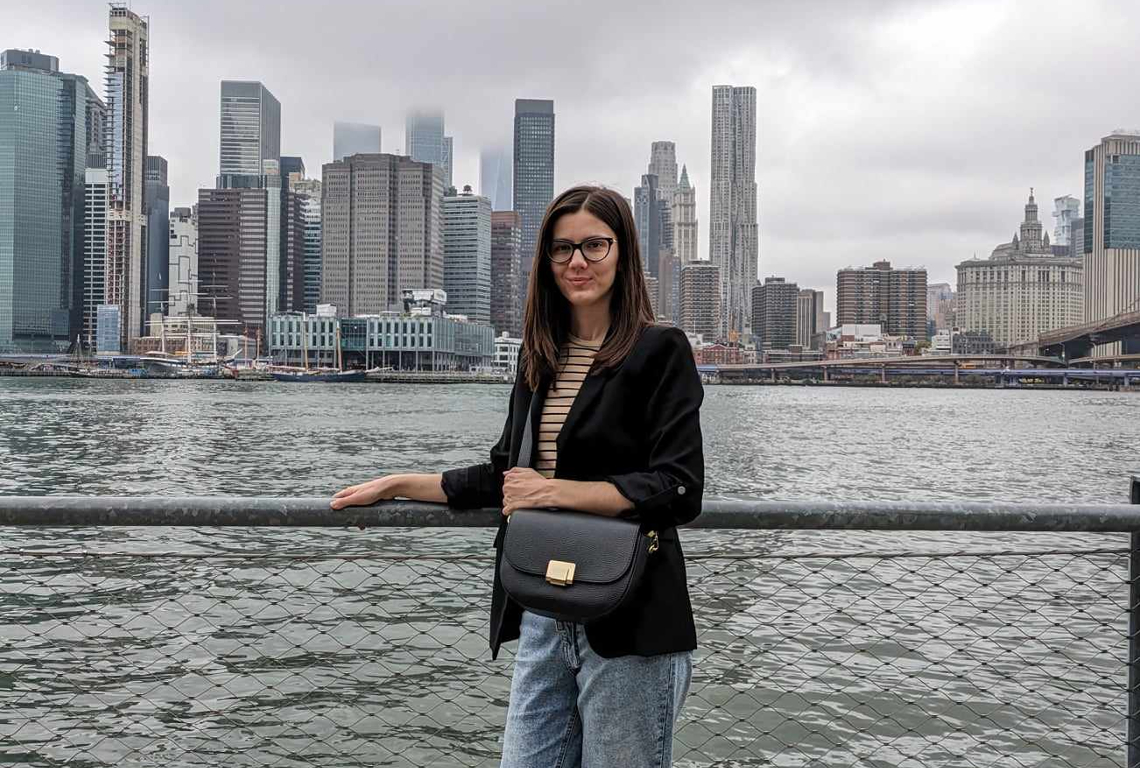
Martina Bábinová Fulfilled Her Dream Thanks to Malý Berlín – She Completed a Residency in New York
It’s been a few weeks since Martina Bábinová returned from the United States. She was there on a curatorial residency that brought her valuable contacts and experience. One of the exhibitions at our Čepan Gallery also resulted from this residency. She shared more in the interview below.
Thanks to Malý Berlín, you got the chance to do an internship – not in Trnava, but all the way in New York. Can you tell us more about how this collaboration came about?
If someone had told me at the beginning of last year that I would spend two months in New York in the fall, I’m not sure I would have believed it. I came across an open call from Malý Berlín for a residency for curators of contemporary art and decided to apply. I still remember the moment I got the email saying I’d been selected. It’s still a small-big dream come true for me.
What was the focus of your stay in New York?
During my stay, I had the opportunity to explore and get to know both the local and international art scenes, build new connections with artists from around the world, and present my curatorial work as well as the activities of the Ernest Zmeták Art Gallery in Nové Zámky, where I currently work. The program at Residency Unlimited focused on networking, collaboration on projects, and public presentations.
Did you make any interesting connections during the residency?
Absolutely, as that was one of the main focuses of the residency. I met many amazing people.
Could you describe in more detail what your days were like during the residency in Brooklyn?
They went by very fast, and each day was different. One of the core weekly activities was studio visits – meetings in studios or at Residency Unlimited with artists who were also in residence at the time. Residency Unlimited offered a variety of programs we could participate in, such as group gallery excursions with guided tours by the exhibition curators, which allowed me to discover many new places. There were also presentations under formats like “Meet Over Lunch” with resident curators, “Talk” sessions with artists, open studios, exhibition openings, and many other events. And then I started checking off all the galleries, museums, and places I wanted to visit. Every day brought new opportunities for inspiration.
What kind of inspiration did you gain in New York in terms of bringing art closer to visitors through educational programs?
Since gallery education is also an area I’m involved in and passionate about, I used my time there to explore various accompanying programs offered alongside exhibitions. I found inspiration in guided tours at the Metropolitan Museum of Art, or the Writing Club at the Museum of Modern Art, which allows visitors to engage with art through creative writing. I also found value in conversations with artists during meetings, particularly about their educational activities – whether at universities, in galleries, or when organizing workshops for the public.
Not long ago, an exhibition took place at Čepan Gallery that bears your curatorial signature. The exhibiting artist was Jelena Micić. How did this collaboration come about?
I first met Jelena during the curatorial residency in New York – she was also there at the time. She was one of the artists I had a studio visit with, during which we discussed her work. I saw some of her pieces in person at an exhibition and was also impressed by her talk at Residency Unlimited, where she spoke about plastic as an everyday part of our lives, its impact and toxicity, and how we are (un)willingly involved in its accumulation. After I returned home, I reached out to her with an offer to collaborate. And since she lives in Vienna, the logistics weren’t complicated to arrange.
Why did you choose this specific theme for the exhibition?
The theme stems from Jelena’s long-term interest in plastics, colors, color systems, and their socio-economic implications. Each artwork reflected a particular approach to collecting, researching, and experimenting with plastic waste materials from everyday life. Jelena deliberately selects, collects, and transforms them into new forms.
The exhibition title Jelena Micić | BASIC FACTS: Orange is red, heart is on the left has a special meaning. Can you tell us more?
I’m not sure I’d call it “special,” but when I was thinking about the title, I wanted it to capture the essence of the artworks without being too straightforward. The goal was for it to intrigue people enough to want to learn more and to include a humorous element reflecting Jelena’s sense of humor. It’s a wordplay that refers to two works presented in the exhibition – one was a spatial ready-made installation titled Bojná polja [Color/Battle fields], created from colorful plastic nets typically used for packaging fruit or vegetables. The other piece was Heart is on the left, made from multicolored garbage bags that Jelena transformed using crochet techniques. The exhibition title references simple, everyday facts that arise from these works – oranges are always packed in red netting, and the human heart is (mostly) located on the left side.
Ján Janočko
Photo: Martina Bábinová’s personal archive

He exchanged a photo for sound, the Netherlands for Finland, the comfort of home for Malý Berlín: An interview with Sjors, our resident
Another of the artists who spend time in the Malý Berlín cultural center and create at the same time is Sjors Hoogerdijk. The Dutchman living in Finland works mainly with the sound medium. In the coming days, he is preparing two interesting events. He tells more about them, about himself and his work in the interview.
We’re sitting here in a studio where you work. What are we looking at right now? What kind of projects are you currently working on?
You can see the piece I’m building. It’s an audio installation. It records sound—sometimes voices, sometimes silence—and then plays it back on a loop. What you’re hearing now is the system feeding back into itself.
That’s quite a specific and unusual medium. Can you tell me more about your background and how you ended up working with audio? Not just this piece, but more broadly—how did this become your artistic direction?
I originally studied photography. Even then, I was already doing what you might call “weird” studio photography—constructing scenes, playing with materials, and experimenting a lot with Photoshop and the structure of digital files. Later, when I got into art school, I also started painting. Then I moved into installations with mechanical elements—using motors to create movements, making objects swing or bump into each other in a sort of chain reaction.
Eventually, I became interested in sound. What really struck me was how similar sound is to photography—at least in the way I understand and work with files. In both cases, it’s about capturing and manipulating data, from silence to noise or darkness to light. My first audio works actually involved light sensors: the pitch of the sound would change depending on the amount of light the sensor detected. So when someone walked by, the pitch would shift. It became this semi-interactive experience.
So audio, for you, isn’t completely different from photography or painting—it’s just another way of expressing similar ideas?
Exactly. Even in my photography and painting, I was always interested in technical aspects—revealing the materiality, the texture of paint or the grain of a photo. With audio, I’m doing something similar: I’m trying to reveal the texture of sound, its graininess, its physical presence.
Let’s go back to the beginning. You mentioned you studied photography, but was there a specific moment when you realised, “Yes, sound is going to be my thing”?
Yes, I think that turning point came when I got to know a Norwegian friend of mine, Eirik Rønneberg. He was already deeply involved in noise music and performance art, and he taught me a lot—especially about using sound in a raw, DIY, almost punk way. Around the same time, I was organising shows with friends, inviting bands from across the country. Putting on concerts and creating spaces for people to gather and experience something live came very naturally to me.
Then I started performing noise concerts myself. In those early performances, I’d use a single object to create sound—like a windscreen wiper motor connected to a piece of wood with a contact microphone. I could touch it in different places and get it to “sing” in a way, kind of like a cello. Gradually, I moved toward creating works that didn’t need me to perform them. I wanted them to exist on their own, to allow the audience to engage with them without my presence or explanations.
So the installation becomes self-sufficient—the audience interacts with it directly, without needing you to interpret it for them?
Exactly. I think it’s important that people can encounter a work and come to their own conclusions. They can think it’s crap, or beautiful, or something in between. The point is that they experience it on their own terms, not just through my ideas or descriptions.

When I first came here—few days ago—it reminded me of a parent’s garage. There are so many cables and electrical components everywhere. Can you tell me more specifically what kinds of materials or devices you usually work with in your performances and installations?
Yeah, it does have that garage vibe! I mainly work with electronics—it’s the umbrella term. I started out using things like guitar pedals and contact microphones, which are mics that pick up vibrations from whatever surface or object you attach them to.
But guitar pedals are expensive, fragile, and tend to break, so eventually I started repairing them. That led me to wonder how I could build them myself—and I found all kinds of schematics online. Once I figured out how to make them, I began using them more intentionally in my work.
As I gained experience, I started designing my own circuits, thinking creatively about what I wanted a piece of electronics to do. I began visualising two objects and figuring out what kind of circuitry could go between them—how to transfer sound, how to manipulate it in interesting ways. That kind of thinking became central to how I work.
How would you describe your work—or yourself as an artist—in just one sentence? For example, someone might say, “I’m an adventure photographer.” What would you say?
I usually say I make sound installations or audio installations. But honestly, “installation” is kind of an art historian’s word—it doesn’t really explain much.
A better way to put it would be: I make sculptures that produce sound. Or perhaps I’d say that I’m constantly translating one thing into another. I’ve become quite good at fixing things—figuring out how to tie two elements together, sometimes literally with a piece of rope. That’s still a big part of my process: identifying a relationship between two things and then finding a way—often a clumsy, visible, hands-on way—to make that connection happen.

You’re originally from the Netherlands, but now you live in Finland. That’s quite a distance. What brought you there?
I did my bachelor’s degree in the Netherlands. One of my friends is Finnish, and through her I met my girlfriend—who’s also Finnish. I eventually moved to Finland to be with her and to do my master’s degree. That was over five years ago, and now we’ve really built a community there. It feels like home.
Can you tell me a bit more about your education? You mentioned photography—was that in high school or later?
I started with photography at a vocational school—it wasn’t a traditional university, more like a school focused on practical skills.
So something like an advanced high school?
Yes, exactly. From there, I moved on to an art school, where I began with painting but later returned to more technical work.
And your master’s degree?
After spending a few years working on art projects in the Netherlands I did my master’s in Finland.
And now you are here. I think you’ve been in this residency for about a month, maybe longer? How has it been for you?
I’ll be here for a total of two months, and right now I’ve been here for about five weeks. So yes, we’re getting close to the end. It’s been really nice—I adore the city. I enjoy walking around, watching spring arrive in the parks, and seeing all the different trees bloom.
And it’s been very special for me to be able to fully focus on my work. I’ve tried to structure my time with solid blocks of studio work—spending whole days soldering, reworking old ideas and redesigning things. It’s not about rushing through a project from A to Z, but rather building something with lasting value. Creating a solid foundation for future works.

This isn’t your first residency, right? You’ve done similar programmes before?
Yes, but never one as good as this.
What makes this one better? What’s the biggest difference?
I think it’s the trust they place in the artist. You come in, and they say, “Here’s your space—now work.” There isn’t a rigid schedule or a detailed plan to follow. That kind of freedom is rare.
In contrast, other residencies have been more structured, like art camps. One of the better ones I did was in a repurposed school building in the Dutch countryside. But even then, I was biking back and forth from home, splitting my time between working there on weekends and doing my regular postal job during the week.
So basically, you’d say this place gives you more freedom than usual. You’re not told exactly what to do—you just arrive and create?
Exactly. Which is both exciting and a little intimidating—having no guidelines can feel overwhelming at first.
You’ve got two events coming up—one is an open studio. What can visitors expect when they come next week?
They’ll be able to see the work and interact with it—it is getting close to finished now. Ideally, I’d like them to play around with the pieces, explore them. I’ll be there too, so they can ask me anything, and I’ll explain how things work or what inspired them.

And the workshop?
For the workshop, I want to show people what sound art can be—and how simple it can be. I’ll demonstrate a few different recording methods, different ways of listening and visualising sound…
What will be the main focus? What can people expect to learn or experience if they attend?
I’ll start by explaining what I think sound art is, and I’ll show some examples. Then we’ll try making something ourselves—together. It could be as simple as banging on a table or listening to the inside of a computer using a contact microphone and discovering what kind of sounds it makes.
Basically, I want to introduce people to a different spectrum of sound. It’s about showing how to play with sound, how to explore it creatively.
So would you say it’s more for beginners or people who already have some experience with sound design or sound art?
It’s definitely aimed more at beginners. If someone is already very advanced in sound art, they probably won’t find it that interesting. I really want to start from the basics—what sound art is, what it can be, and how it connects to other art forms.
So it’s a bit like an introductory drawing class, just with sound instead of pencils?
Exactly. A sound sketching class, if you will.
So it’s really for anyone who’s curious—someone who maybe wants to try something new and experiment a little?
Yes, that’s the idea. It’s for people who are open and a bit curious.For those who want to try and learn something new.
Ján Janočko
Photo: Michaela Holota Lehoczká, Laura Soltan

Translator Kateryna Matviichuk Talks About Her Three Months in Residence and Her Love for Slovak
For the first time, a translator joined us as part of the residency program. Kateryna came from Ukraine with the goal of translating a Slovak book into her native language. What fascinates her about Slovak, what she enjoys about it, and how she tackled Slovak literature are all revealed in this interview.
Katka, why did you choose Slovak out of all the languages in the world?
In Ukraine, we have a different educational system than in Slovakia. We finish high school at 16 and then have to make one of the most important decisions of our lives—choosing a major and field of study at university. At 16, I didn’t understand myself or the world very well, so I based my decision on one key priority—I loved reading, so my chosen field had to involve literature.
I was intrigued by the Slavic philology program because it offered the opportunity to study various Slavic languages alongside literature. It seemed like a good combination — interesting, practical, and useful. From a rich selection of languages, I chose Croatian and Slovak — they attracted me with their Balkan charm and… exoticism (laughs). Yes, believe it or not, neighboring Slovakia seemed exotic at the time because people were surprised and even puzzled by my choice: They teach this language here? And someone studies it? Why? What will you do with it?
But it turned out to be the right choice. I enjoyed studying the similarities and differences between Slavic languages, observing patterns of their development, and their mutual influences. After student exchanges in Croatia and later in Slovakia, I was very satisfied with my choice.
What do you enjoy most about Slovak, and what do you find the hardest?
This might sound strange, but I loved studying Slovak grammar and then constructing sentences like puzzles — word by word, sometimes comparing with constructions in Ukrainian or Croatian. It’s very satisfying to me.
My first challenge was mastering the accent. Since I started studying from textbooks and audio materials, I only realized during my student exchange in Prešov that Slovak isn’t spoken that way, and I had to retrain myself.
Another difficulty was understanding reflexive verbs. I had to accept that phrases like pomáhať si (to help each other) and kúpiť si (to buy for oneself) follow different logic. But now, reflexive verbs are one of my favorite topics, and I enjoy explaining them to others — it makes me feel like I possess rare knowledge that I can pass on.
Now, I’m more concerned about nuances in colloquial speech, dialects, phrases, and cultural context. I’ve attended stand-up performances in Slovakia twice. The first time, I understood everything and laughed along with the audience, but the second time was a disaster. Not because of the comedians, as the audience laughed heartily, but because I didn’t understand the jokes or often even the words. The tension gave me a headache, and I had to leave.

When did you start translating?
I began as a student. In 2013–2014, Croatian journalists visited Ukraine to make a documentary about the Revolution of Dignity (Euromaidan) and later about the start of the war. I traveled with them to border towns and helped with translation.
That same year, I attended a Belarusian alternative and rock music festival, Basowiszcza, in Poland. There, I learned it would be impossible to organize a similar festival in Belarus due to censorship and cultural and linguistic oppression. I discovered that Belarus was undergoing extreme suppression of the Belarusian language in education, media, healthcare, and other spheres — threatening its very survival. Motivated by this, I translated several Belarusian books into Ukrainian to support the language.
One book, The Language by Viktor Martinovich, was especially relevant as it’s a dystopia centered around a banned language, distributed illegally like a drug. Another was a philosophical novel, Marginalis, by Kirill Stasevich. I recall that during editing, I realized I had mistranslated nearly all the names in the text.
How do Ukrainians perceive Slovak?
Previously, reactions were mostly surprise — Why Slovak? — followed by questions like, Is it easy? Is it very similar to Czech? Since the outbreak of war, things have changed. People now say, Oh, you must be busy teaching Slovak. And it’s true — many Ukrainians have found refuge and a peaceful life in Slovakia. Now, people understand the importance of this language for our people and country.

Does Slovak have much in common with Ukrainian?
Both languages belong to the Slavic language family, though Slovak is part of the West Slavic group, while Ukrainian belongs to the East Slavic group. This means that many basic words share the same origins, and overall, lexical similarities between the two languages range from about 40% to 60%.
However, despite their shared roots, many words have changed over time due to influences from other languages. For example, Slovak has borrowed extensively from Hungarian, while Ukrainian has borrowed from Polish, Russian, and even Turkish.
Both languages share a similar grammatical structure, including noun, adjective, and verb declension. For instance, they both have gender distinctions (masculine, feminine, neuter) and grammatical number.
What is the hardest part of Slovak for you?
Speaking like a native Slovak rather than like a textbook. This requires constant interaction with Slovaks to learn all the nuances, slang, and cultural context. Watching videos or films can never replace live communication.
What was your goal during your residency in Malý Berlín?
My goal was to immerse myself in contemporary Slovak literature, read as much as possible, and select works that would interest me and appeal to Ukrainian readers. During my residency, I translated several stories from Dominika Moravčíková’s collection Dom pre jeleňa (A House for a Deer). I also spoke with the author, sought her advice, and learned more about the translator-writer collaboration.
So I accomplished everything I had planned, and I’m very happy about it.
How did you find out about this residency?
A friend told me about it and mentioned that I could still apply. At first, I was hesitant and confused because it had been a long-standing dream of mine to create an anthology of contemporary Slovak literature. However, with the start of the war, I had forgotten about all my past wishes, so this opportunity felt like a wonderful surprise and a reminder from my past.
How did you choose the texts you translated during the residency?
My goal was to create an anthology of contemporary Slovak short stories. Several criteria played a role in the selection process. It was important for me to translate works that resonated with Slovak readers, that were appreciated by both book enthusiasts and literary professionals, and that I found personally interesting.
I started by exploring works by four authors, but it was the fifth, Dominika Moravčíková, who really captivated me. That’s how I began translating her stories from Dom pre jeleňa. Since I aim to publish these translations in Ukraine, I also analyze what would resonate and appeal to Ukrainian readers.
My curator, Anna Siedykh, gave me a lecture on contemporary Slovak literature, which provided me with an overview and a list of authors and works to focus on.
Thanks to the residency, I also had the chance to meet publisher Koloman Kertész Bagala, who I think understands contemporary Slovak short stories better than anyone else. His recommendations and advice were invaluable.
How did you adapt to living in the center of Trnava?
That, too, was a long-time dream—living in the center of a beautiful, quiet European town, overlooking a peaceful courtyard that tourists occasionally visit. My mornings started with me sticking my head out of the attic window to look at the tops of plane trees and the city tower. I did the same before going to bed—it became a three-month tradition.
My phone is now filled with dozens of photos of that view in different weather and lighting. On Fridays or Saturdays, I’d visit the city market near where I lived, and I’d enjoy a walnut croissant right there.
The Nádvorie space is very inspiring—it makes you want to work, create, and come up with new ideas. The change of environment had a very positive impact on my productivity.

What did this residency give you?
It provided ideal conditions for studying literature. With access to libraries, I read a lot of Slovak works and could finally focus on translating. I also improved my Slovak by attending literary events in Trnava and Bratislava, where I had the opportunity to hear authors speak and meet them personally.
I also met Slovak publishers. I was pleasantly surprised by how many Ukrainian books are now being translated into Slovak—I keep seeing new releases in bookstores and hearing about public presentations. I want to ensure this exchange isn’t one-sided, which is why I’m eager to finish the anthology so it can find its place on the shelves of Ukrainian bookstores.
Will you return to Trnava someday?
Yes, I’d love to. This experience was truly unique for me.
What did you like most about Malý Berlín?
I loved observing the dynamic energy of the center, where something happens every day and the space attracts a diverse crowd. I saw teenagers jumping and shouting during rap performances, children creating their own animations, literature enthusiasts at the Ypsalon festival, and townspeople enjoying theater performances.
Organizing such a varied and vibrant program must be a challenging job, but it’s clear that everyone at Malý Berlín knows their role well.
Ján Janočko
Photo: Lívia Martvoňová
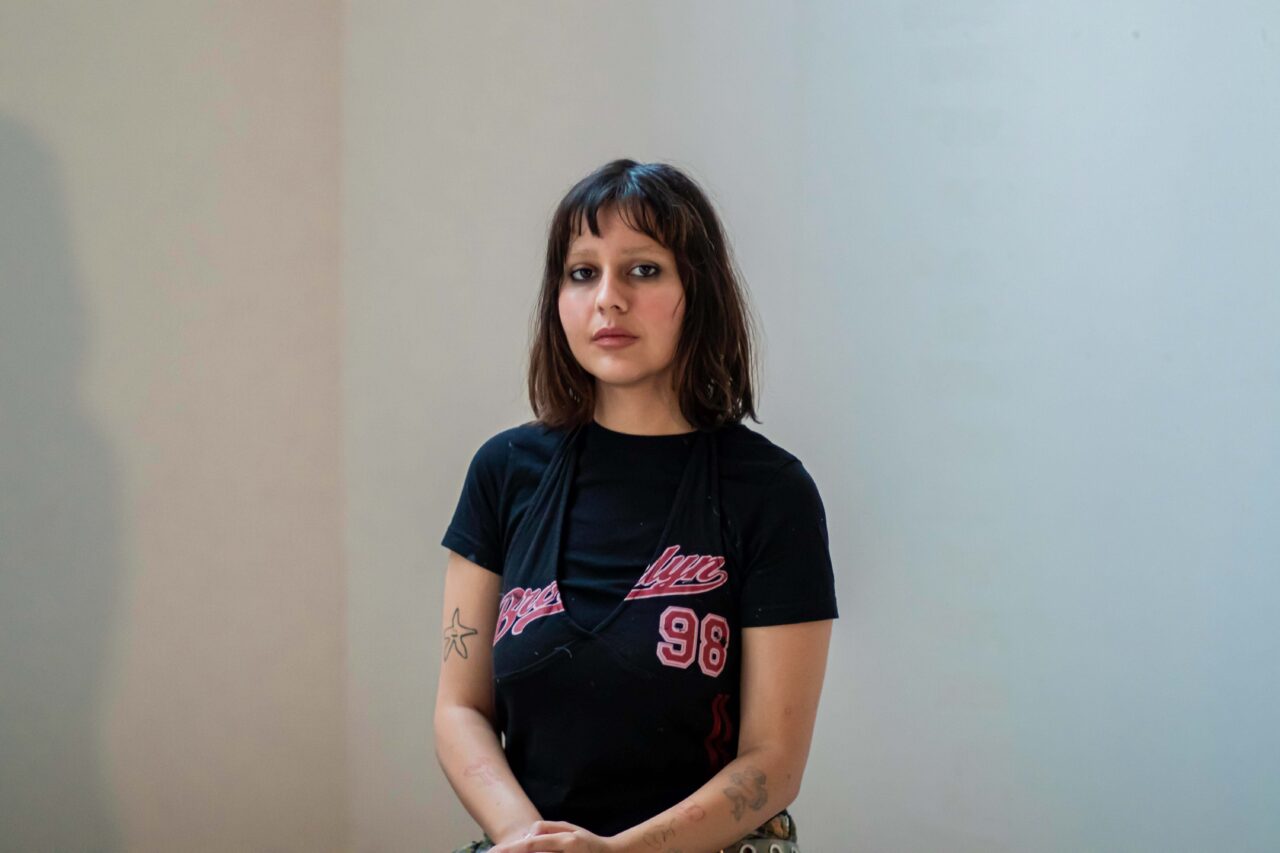
Malý Berlín is preparing another Open Studio: This time with the artist Sopiko
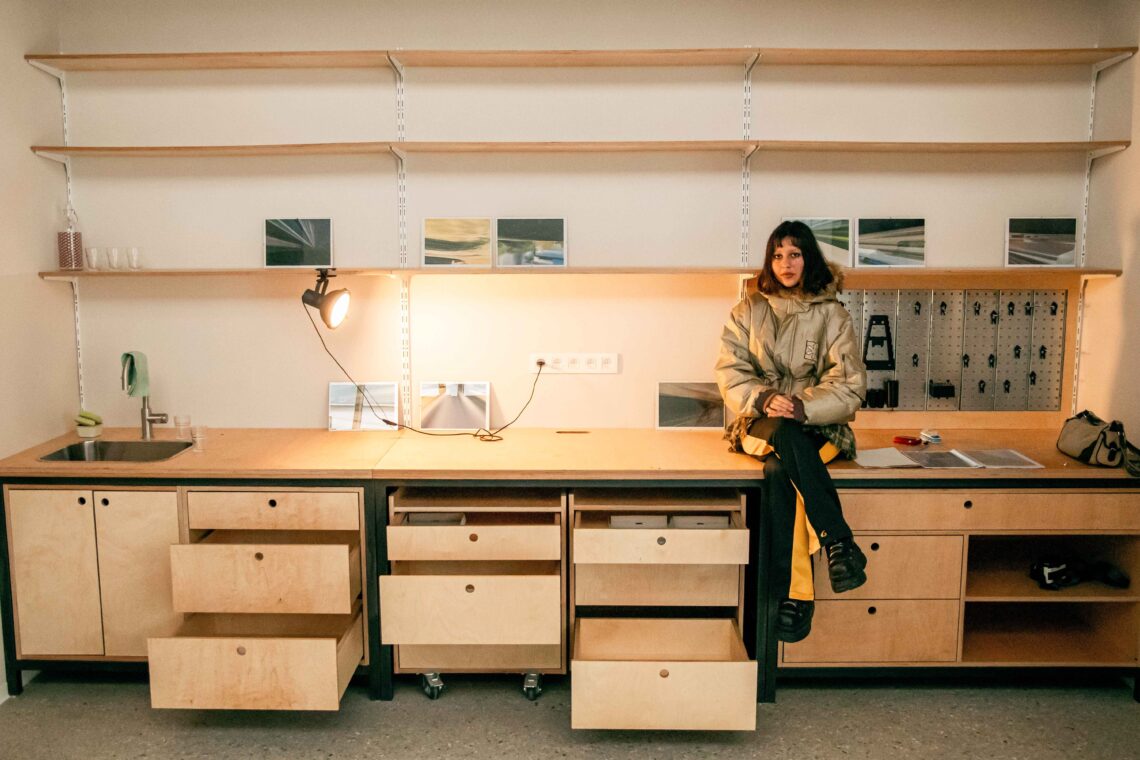
In the art studio at Nádvorie, we recently hosted Georgian artist Sopiko. This Thursday, November 21st, at 7:00 p.m., she will present her work to the public. Learn more about Sopiko, her journey, and what to expect at Open Studio in our interview.
Sopiko, what impressions will you take away from your residency in Malý Berlín?
I’m truly grateful for the chance to be an artist resident at Malý Berlín. Having the space, time, and a peaceful environment to focus on creating and connecting with others was such a gift. It was inspiring to work in a new place, experience a new country, and collaborate with a cultural space like this. This residency gave me a deeper understanding of my work and practice while opening up opportunities for meaningful conversations with the community. It also encouraged me to try new approaches and see my ideas in a different light. This experience will stay with me and continue to shape my future projects.
What has the residency brought to your life and what lessons has it taught you?
Residencies are such an important part of an artist’s life. Whether they’re short or long, they challenge you, shape your perspective, and push your practice in new directions. My two months at Malý Berlín were a complex, diverse, and deeply interesting experience. Working on my project within this set timeframe was both challenging and incredibly fulfilling — it taught me how to use time and space more intentionally. Beyond the work itself, interacting with the local community added so much depth to the experience. Getting to know the culture, art scene, and daily life in Slovakia was a significant and inspiring addition that will stay with me.
Were you afraid when you went to Slovakia? What were you most afraid of?
I don’t think I ever feel afraid of going to a new country and exploring it, whether it’s for work or personal reasons. So, no, I wasn’t afraid to come to Slovakia for this residency. Of course, there are always things to consider when you’re spending months in a new place. I thought about finding a safe space where I could feel comfortable, being able to express myself openly with people, and having the chance to fully experience life both through my work and as a person. Those were my main thoughts, but fear was never part of it—just curiosity and excitement.
How long did you stay in the residency at Nádvorie?
The residency lasted for two months, starting in late September and ending in late November.
What exactly did you work on?
During the residency, I worked on a project that explored various approaches through different mediums and concepts. The project was based on the idea of city scoring and urban planning, studying spaces through noise and understanding them as both a language and an act. I created a two-channel video: one channel captures the decibel levels in the city using an app on my phone, presenting the image alongside the data, while the other features text-based research written during the residency and footage of writing under a microscope. This visualizes the process of mapping and framing space through language and noise. I also developed a photo series by screenshotting spaces in Trnava, capturing only the transitions between points of movement. This created a kind of scoring of the city, devoid of a concrete narrative. Lastly, I composed a sound piece using a Georgian word that refers to both a space and a person, adding a linguistic and cultural layer to the work.
What was the most challenging part of the work?
There are always challenges when developing work, and I believe creation should be challenging. Being in an unfamiliar space was one of those challenges, but my curiosity and approach helped make the process easier. Of course, there were also challenges in deciding how the work would develop, how to connect all the information, and how it would be understood by others.

The open studio is coming up, what can visitors expect from this event?
At the open studios, I will present the project I developed during the residency. Visitors can expect to see a sound installation, a two-channel video, photographs, and texts. The exhibition will be a complete reflection of the topics and concepts I explored during my stay, offering an insight into both the process and the final outcome. It will be interesting, I believe, for visitors to see how a foreign artist reflects on their space and develops work in a different country.
Interdisciplinary artist based in Tbilisi, Georgia. She earned her BA in Visual Arts from the School of Visual Arts, Architecture, and Design at the Free University of Tbilisi. Through her research-based practice, Sopiko Sheitnishvili explores the intricate relationships between the Georgian language, urban noise, voice, and visual representations of sound. Her work examines how these elements shape and transform the experience of public spaces and investigates how language itself is continuously reshaped and oppressed through technological influences in modern environments, presented through a diverse range of media, including installations, sound works, writing, photography.
Ján Janočko
Photo: Lívia Martvoňová
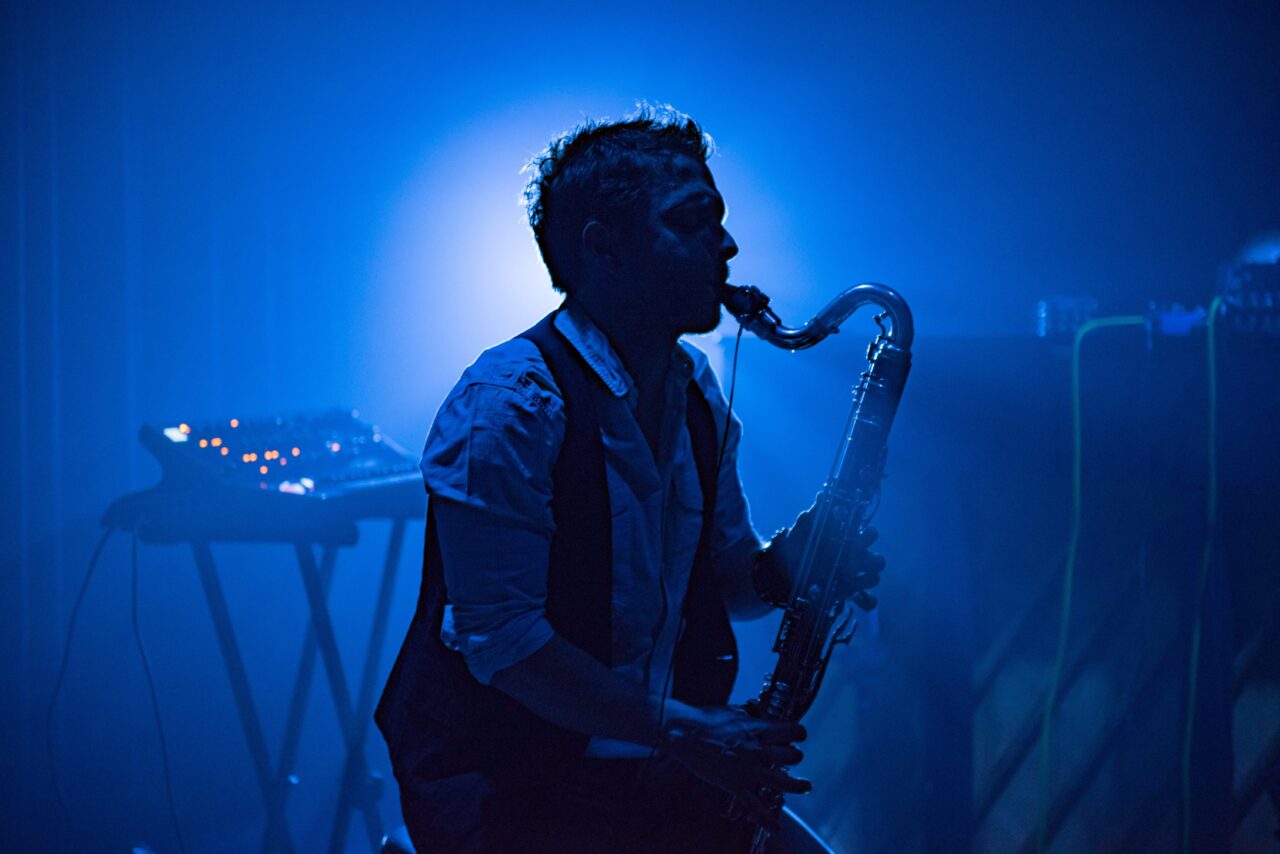
Gareth Davis will be featured in our next concert from the b minor cycle. In it, he will present compositions separated by 60 years
The series of concerts of contemporary classical music under the name b minor continues in the fall. Already on September 7, we will welcome another musician to Malý Berlín. Gareth Davis prepared interesting stories for the listeners, which he will play on the clarinet. It will be a journey through time full of memories, but also current topics. He reveals more in the interview.
We will see you soon in Malý Berlín. What are you most looking forward to?
I’ve done some great shows in Slovakia, but I’ve not been to Trnava. Being able to play in different places is something that I am always looking forward to. I am mostly playing music from the last 60 – 70 years which is, for me, a unique experience with the audience. The music itself is often less known, so being able to introduce it, share the experience and tell a story is fantastic.
Your path to clarinets was said to be quite interesting. Can you tell us more?
I now play only the low clarinets, and have done for quite a long time. My own taste in music is quite eclectic, and I’ve always had just as much interest in rock, electronic music and improvisation as I have in classical and contemporary classical. I do not know if my path was more interesting than other people, but maybe one thing that has been interesting for me is constantly trying to extend and challenge myself. Playing different or unexpected kinds of music, finding different ways to fit the instrument in a specific combination.

How has your relationship with music evolved over the course of your life?
I have been into many kinds of music from a young age. The first orchestra concert I remember going to was the music of Xenakis. I was probably around 7 years old. I’m not sure if there was a conscious choice in that or my parents simply decided it fit that week, but for me it created the idea of music being so many things from the start.
Over time I have found a way to play in things that I like, and this is sometimes a long process. Knowing when to wait can be difficult but also when you reach the point you have something you know you want to say and communicate with the audience, for me, the process makes much more sense. Contemporary music can seem abstract or ‘difficult’ but perhaps a lot of this is down to the ideas that are presented with it. Every day we hear sounds that, without context, would seem to make no sense. The context of our daily life gives them a narrative and this can make things thrilling. So perhaps my relationship is one of trying to find constantly new ways to tell stories.
Will you come to Slovakia alone or with the support of some musicians?
The two pieces I am playing are for solo bass clarinet and electronics. So I will be the only person playing an instrument, but I will be joined by the Czech sound designer Mikuláš Mrva. Mikuláš wrote the software patch to perform the pieces. A software patch is a series of instructions that tells the programme what to do at certain times. In the past, instead of using electronics, large analogue devices were used. For example, to repeat a sound in a concert, there would need to be a microphone recording what I play to tape, this would be repeated a few seconds later creating either a loop or kind of echo effect. Now there is software to do this, but in more complex pieces the software needs to be ‘told’ what to do. So while I am playing the bass clarinet live, Mikuláš is taking my sound, changing it, stretching it, cutting it, mixing it and sending it to different speakers to create a multi layer texture. The single instrument can, because of this, become a kind of ensemble.
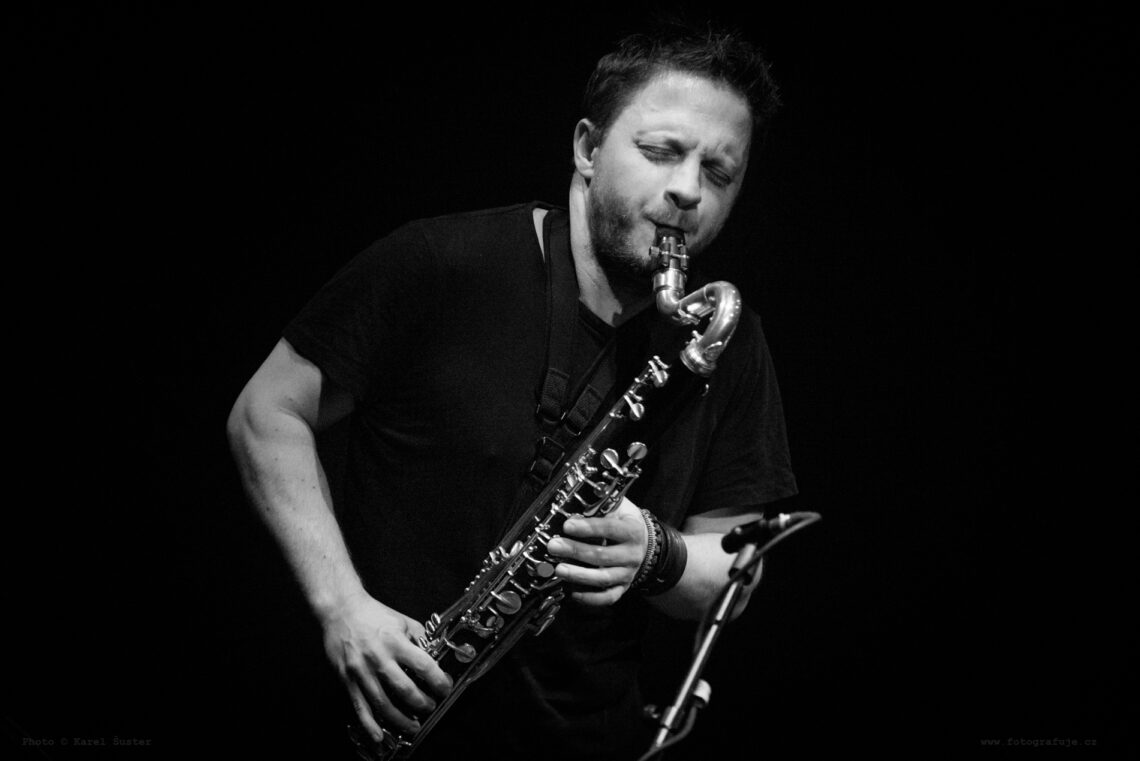
Can you please introduce the program of the concert?
I will play two pieces. Solo, by Stockhausen, was written in 1966 while Theatre of the Mind by Roland Dahinden, was written in 2021.
The piece by Stockhausen explores how a single instrument can become a stack of sounds, each layer slightly changed to create a sort of landscape.
The work by Dahinden is far more narrative. I premiered it at the festival in Ostrava in 2021 and it was written as a response to a huge number of people who were struggling with issues of mental health during the pandemic. In the Netherlands (I live in Amsterdam), the number of children having growing struggles was enormous. What Roland explores in this piece is the sensation of being ‘locked in’. The way in which thoughts start to circle in the mind, recreating, repeating, always evolving but still stuck. Sense comes and goes, sometimes fixated, other times a foggy blur.
What exactly can viewers (and listeners) expect?
These two pieces have nearly 60 years between them. Stockhausen still has a name connected to the contemporary yet this piece is older than a lot of audiences by quite a few years. Listeners can hear how this music can be looked at again, how a single instrument can become so many layers of sound. At the same time they can listen to a piece which has the same basic use of technology but in a very different way. Small sounds and objects are also used and become much bigger, creating a kind of ambient soundscape of memories.
Ján Janočko
Photo: Gareth Davis Archive
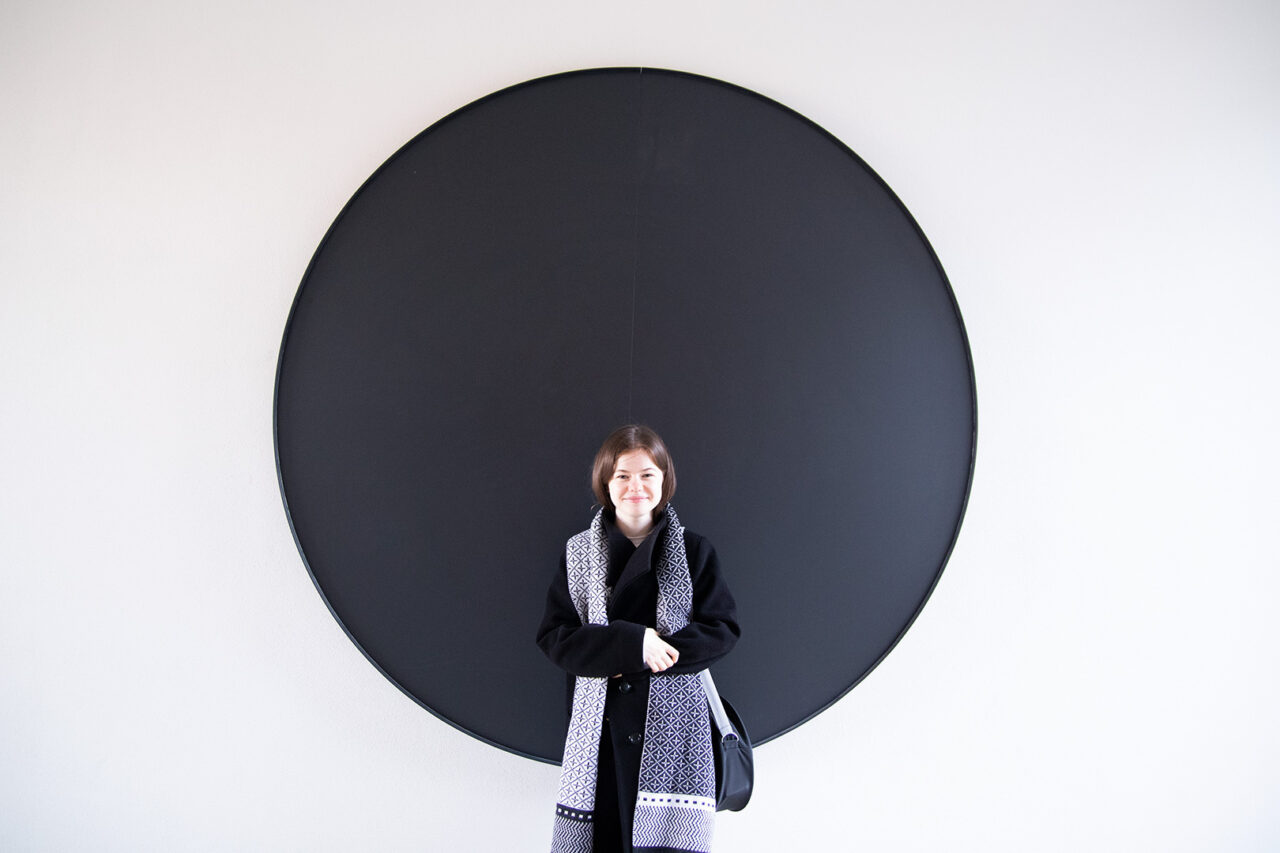
Volunteer Vika: She Gave Vinyl Records a Second Chance and Found a New Home Here in Just a Year
For an entire year, Vika Sheuka, a volunteer from Belarus, lived and worked with us. You might have seen her not only at events organized by Malý Berlín, but also helping out with various tasks like making unique bags, greeting guests, and even chatting with you during a festival or workshop. Just before she left, Vika shared what she had been doing here and what left the biggest impression on her.
She came all the way from Belarus and became so at home here in a year that she’s eager to return soon. During her 12 months in Malý Berlín, Vika made Slovak friends and might soon return to continue her studies.
Vika quickly adapted to life in Malý Berlín, and over time, we overcame the language barrier together. Visitors could see her at various events in our spaces. “It was a good experience, and the whole year was a huge adventure for me. I made new friends, experienced moments I had never had before; it was something completely new. None of this would have happened if I stayed home,” says Viktoria.
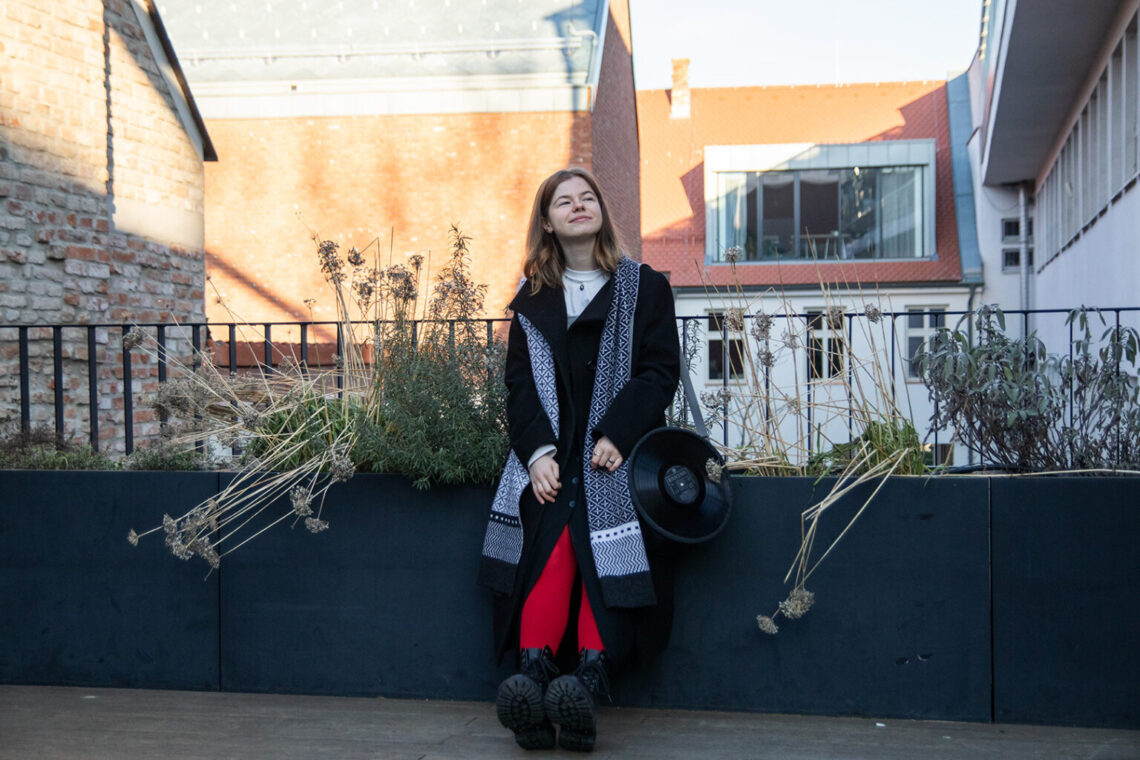
The Belarusian resident spent almost every working day with the Malý Berlín team. She became well-known in places like the nearby Kubik, a place where we pick up posters, and even made friends with the attendees of our events. “I helped with tickets, prepared decorations for different events, took photos at various events, created stories for social media, and I also helped with organizing the Emília Rigová exhibition, the Ukrainian book library, and events for Ukrainians,” explains Vika.
Besides her various contributions, Vika also engaged in educational activities. She brought an interesting workshop to Trnava. Her creative project involved making beautiful bags from unwanted vinyl records, giving them a second life – something she had already started back in her native Belarus. “I initially found the idea online. When I came to Malý Berlín, I saw there was a sewing machine here, so I decided to continue making bags in Slovakia. I even taught a few people how to do it during a workshop,” our volunteer reveals. Those who visited our literary festival, Ypsalon, surely noticed the imaginative decorations made of leaves from old books, which Vika creatively arranged throughout Malý Berlín.
Vika fully enjoyed the atmosphere of Malý Berlín, especially since she lived right in the Nádvorie complex. Not only did she not have to travel far, but she also enjoyed summer events held outdoors. “I had them right under my window!” laughs the Belarusian volunteer.
For Viktoria, it was a new experience filled with encounters with people from other countries – some she met at work, others in her apartment. “Various artists, visitors, and other residents regularly came here. They lived with me in the apartment, and there were quite a few of them since most stayed in Slovakia for only three months, while I stayed for 12.”
She enjoyed meeting people from other countries, but what about meeting Slovaks? “I see a similarity between Belarusians and Slovaks in that we have somewhat similar histories; in some ways, we are alike. On the other hand, many times I was surprised; it felt like I was in a different world.” Despite the differences, Vika would like to connect her future with our country. “I definitely want to return to Slovakia. I’ve learned a bit of Slovak here – after all, we’re doing this interview in Slovak,” she adds with a laugh.
How did she find learning Slovak? “It’s not that hard; many words are similar, but on the other hand, some sound the same but mean something different. I still have a lot to learn; my Slovak is far from perfect,” says the future student of one of Trnava’s universities, perhaps.
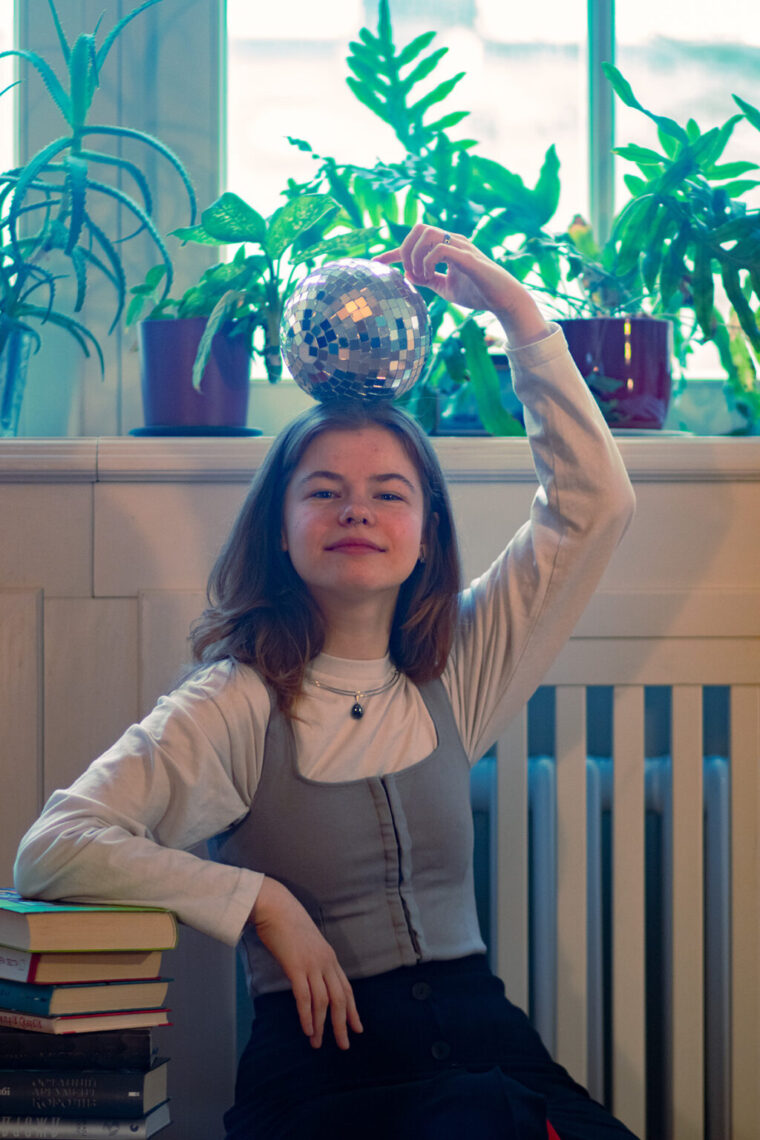
Vika adds that she would like to explore Slovakia even more – although she saw quite a bit during her first stay with us. Besides Trnava, she was impressed by the Tatras, Banská Bystrica, and other parts of our country. “I was in Nové Zámky, for example, and was surprised by how beautiful the gallery there is. But many places in Slovakia caught me off guard like that. In many villages here, you can find beautiful churches, interesting historical sites, and various attractions for tourists,” describes Vika.
If Vika returns in the fall, you might see her around Malý Berlín again – whether as a visitor, a volunteer, or perhaps as a workshop instructor. Time will tell.
Ján Janočko
Photo: Petra K. Adamková

Cultural nomad Maria Kardash talks about her impressions of the dance-research residency in Malý Berlín
Another resident who stayed in Malý Berlín and worked here on her research is the Ukrainian Maria Kardash. In the interview, the interdisciplinary artist and dance anthropologist talks about her experience working in Little Berlin, about the fact that it was not the first time she had worked with our cultural centre, and also about what made her a nomad.
Maria, is it true that this is not your first experience with Malý Berlín? When were you in contact with our cultural centre in the past?
It’s actually a story of luck, coincidence and friendship-induced networking. Malý Berlín invited a good friend of mine, also a Ukrainian dance researcher, Mariia Bakalo, to participate in a panel discussion on dance under totalitarian regimes in Bratislava in May this year. But at that time Mariia would have been on her studies in the USA, so she suggested reaching out to some of her Ukrainian colleagues, including me. And then one day I got an invitation from Malý Berlín to represent Ukraine on this panel discussion instead of Mariia. And then in May I went to Bratislava to talk about dance. But somewhere in between these two points in time, I’ve also discovered that Malý Berlín hosts a longer summer residence for artists and researchers and decided to apply for that separately. And then, as you know, it was some kind of luck again: my project wasn’t selected first, another researcher arrived at this residence but only stayed for a month, and then I was invited to Malý Berlín again.
I know that you come from Ukraine, but you don’t live there anymore. Can you tell us more about your work?
Addressing the first part of your question: unlike for many of my compatriots who were forced into the nomadic life after the full-scale war began in 2022, mine was a deliberate choice. Already since 2011 I occasionally stayed abroad for long-term work or volunteering, but then in 2018 I was able to study Dance Anthropology via Erasmus Mundus – this type of master’s programme where you spend each new semester in a different country – and my life has never been the same ever since. After graduating, I came back to Ukraine for a half a year but then went abroad again – first with the ESC (European Solidarity Corps) long-term volunteering (literally jumping on a last train as I turned 29 and these kinds of projects are for people in their 18-30s), then on an artistic residency, then with a research fellowship, then with another research fellowship and so on, until this path brought me to Trnava.
I work at the intersection of arts and academia: as a performer, I dance and take part in theatrical projects, and as an anthropologist, I research the cultural context in which the dance takes place. Lately I’m much more focused on research than on performing, and exploring topics far beyond the realm of performing arts. I study how different communities engage in the process of othering and make the division into Us and Others, how the ideas about the ‘civilisational’ East/West divide arise, how we as Westerners define what is ‘exotic’. Even though these themes are quite broad, they also come out of my dance practice, or, to be precise, from my observations of how non-western dance forms are perceived in a Western context.
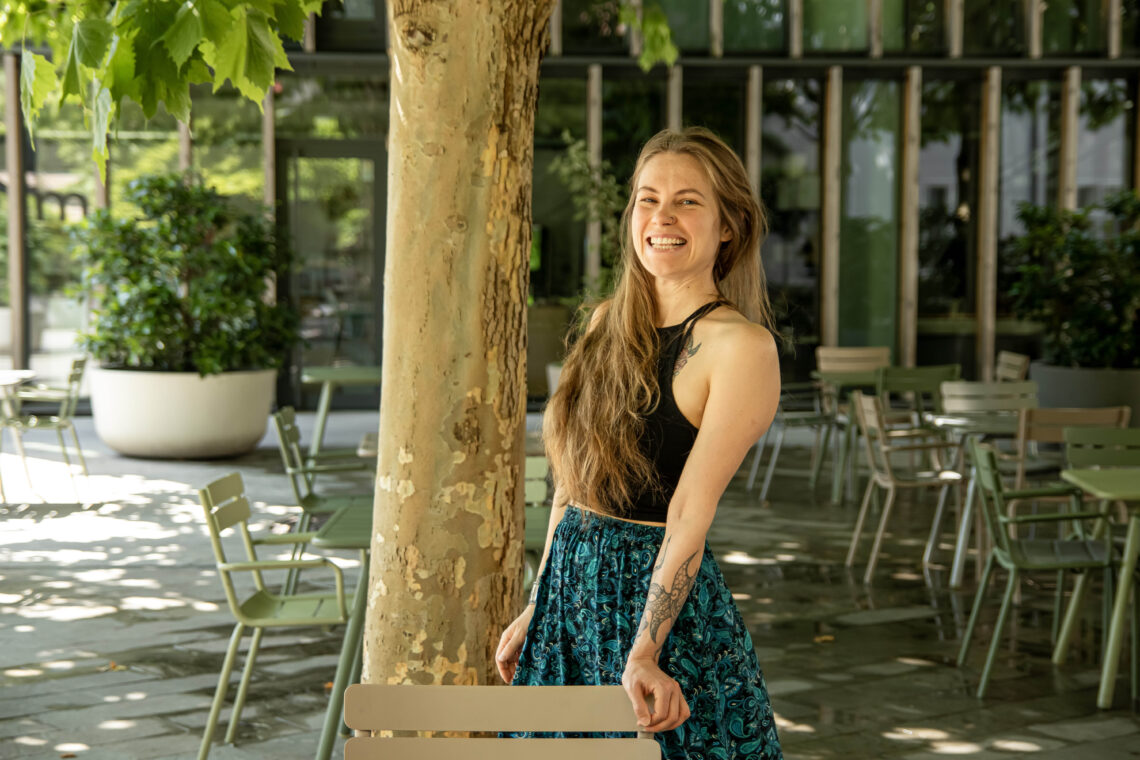
In your work, you also examine the politics of the body and dance in the USSR, with a focus on Ukraine. What makes this topic so interesting to you?
The USSR Dance Politics is one of my long-term research projects. The thing is, dance is usually considered to be less politically ‘charged’ than other forms of art. Very often it is perceived as pure entertainment, something that people do or watch for fun. In fact, like any form of art or social activity, dance can become a vehicle for cultural propaganda. I study in which way the state-supported Soviet dance ensembles operated, what kind of images they produced and how they were perceived when they toured abroad. Let’s say that this research is my humble input in deconstructing the machine of Soviet-Russian propaganda.
Besides that, any kind of dance reflects a particular socio-historical context from which it has emerged and can tell a lot about the society that performs this dance. Studying how people moved in the USSR (I would even say, how they were allowed to move) helps to understand the present-day Ukrainian context better: how my generation moves, what movements we have inherited from our parents and grandparents, and how we actually feel in our bodies.
What convinced you to come to Trnava for the residency?
I had a good experience with Malý Berlín in Bratislava, so I was really happy when I got an invitation to come back, now for a longer period. I had already made some arrangements for the summer though, so I travel around quite a lot, but I still enjoy the moments that I spend here.
As I said before, I am a nomad – I never miss a chance to go on a project in a new country. Slovakia will be the ninth country I have stayed for at least two months in (before it was Turkey, Cyprus, Norway, France, UK, Poland, Hungary and Austria). And I do believe in the power of networking – for me, it’s of great importance to connect with professionals from the cultural field and to engage in some local projects (like when Maly Berlin suggested I moderate a discussion on dance performance at The Teen Theatre Fest in Trnava). It’s about making a difference, bringing some change to the local community, but also changing and evolving myself as a person. Here I have plenty of time to work on my own stuff, but I also learn a lot from the space itself. I´ve said before that I’m much more engaged in research now than in performing, right? I don’t know, maybe it’s the atmosphere of this place, but here I often feel the urge to create. I’m going out for an evening walk, and then I find myself dancing somewhere on a bridge. If I ever produce a video result of these walks, I will call it “Actually, I was supposed to write an article but here I am dancing in random places in Trnava”.
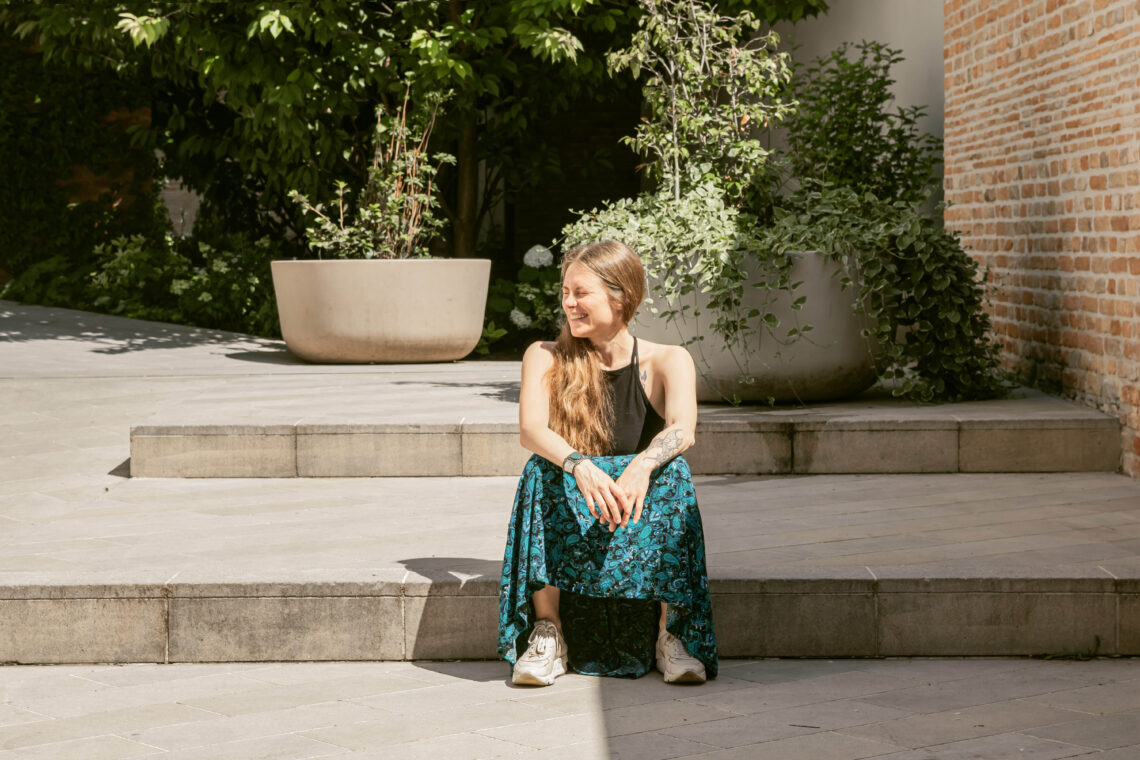
How do you like Trnava and Malý Berlín so far?
I joke a lot that Trnava is a calm and lovely town in Slovakia, but apparently everything that happens in Trnava, happens right under my flat. Living right at Nádvorie in the summer is not for introverts, for sure. There is something happening every week if not every day: a concert, a festival, an exhibition. So, my advice for future summer residents: prepare to be sooooo engaged in the cultural life of Trnava! Eventually, you will find joy in it even if you are an introvert: watching a world-class jazz concert from the terrace of your apartmentwith a glass of wine is quite a unique experience (and then the world-level jazz musicians try to steal your chair from this terrace – also a unique experience and definitely a funny story to remember). I know I might sound sarcastic, but I actually enjoy having so many activities during this residence as a bonus to the main ‘package’. I would even say it’s a privilege.
Please reveal what exactly you are working on in Trnava.
Even though I applied for a project on Soviet dance, I’m working on something different right now. In fact, the way the panel in Bratislava unfolded has pretty much determined the topic of the article I decided to write for Malý Berlín. During that discussion in May, I began to wonder why under the declared topic of ‘Dance under Totalitarianism and After’ we were discussing only the high-art-western-canon kind of dances – ballet derivatives loosely labeled as ‘modern’ or ‘contemporary’ dance (why loosely – because I’d say that all the dances practiced in the present moment reflect this present moment and therefore are ‘contemporary’). As an anthropologist, and no less as a person exposed to non-western cultures through work and personal communication, I have a much broader understanding of what dance is and what kind of dance deserves to be studied and discussed in panel discussions. Surprise – all kinds of dance! I would even say all kinds of human movement – for example, with fellow dance researchers in Ukraine we have been talking about new kinds of social choreographies (collectively repeated movement patterns) that emerged with the start of the full-scale invasion, like massively going to the shelters during air alarms. So that’s what my article will be about: where and how we draw the line between dance/movement that falls into the category of art and dance/movement that is missing some qualities to be considered art’ from the westerner’s point of view.
Ján Janočko
Photo: Lívia Martvoňová
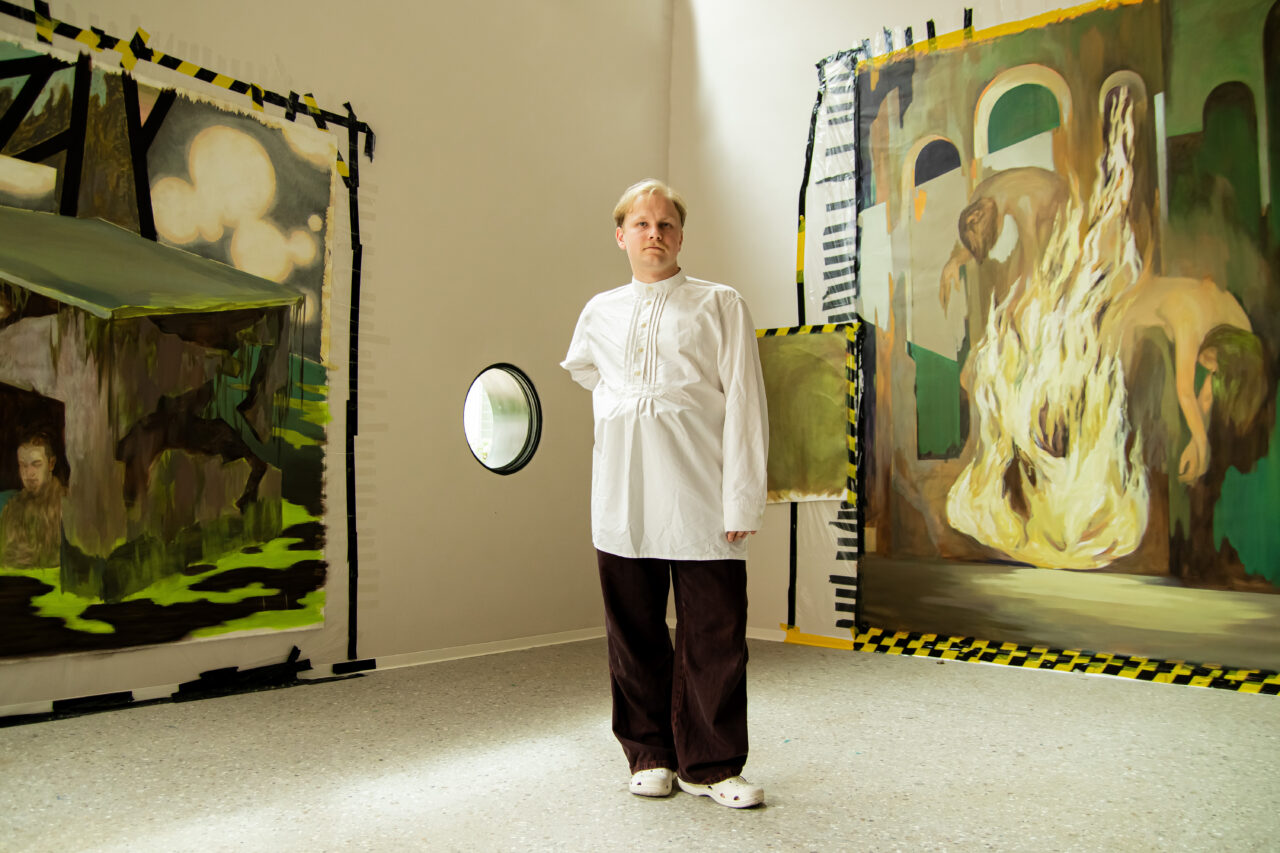
The art studio in Nádvorie has its first resident: What did Belarusian Serafím work on?
The cultural center has been organizing residencies for skilled artists from abroad for a long time. The most recent space was given to the Belarusian painter Serafím, who also got the opportunity to be the first tenant in the studio at Nádvorie. You will soon be able to meet him in person. He talks more about the event at which he will invite you to the studio and about his stay in Slovakia in this interview.
Seraphim, you are the first person ever to work in the studio at Nádvorie. How does it feel to be part of such a premiere?
I’m really proud that I’m the first resident here! Now I’m working in excellent conditions. But here it was unusual for me to start in a clean new space, because usually art studios are dirty, there is a mess everywhere etc. and these are the conditions that I was used to. Sorry, I don’t mean to say something bad, it is a good studio, it is something new for me and I really like it!
So how did you get used to this space?
Oh, it is a very good experience, because I have never been to such a long art residency, as well as abroad. And I really enjoy creating my art. The art studio here is bigger than mine in Minsk and I have a great opportunity to work in such a big space and paint very big artworks that I have not painted yet. All the stuff I needed was here and I started very quickly and also got used to it very quickly.
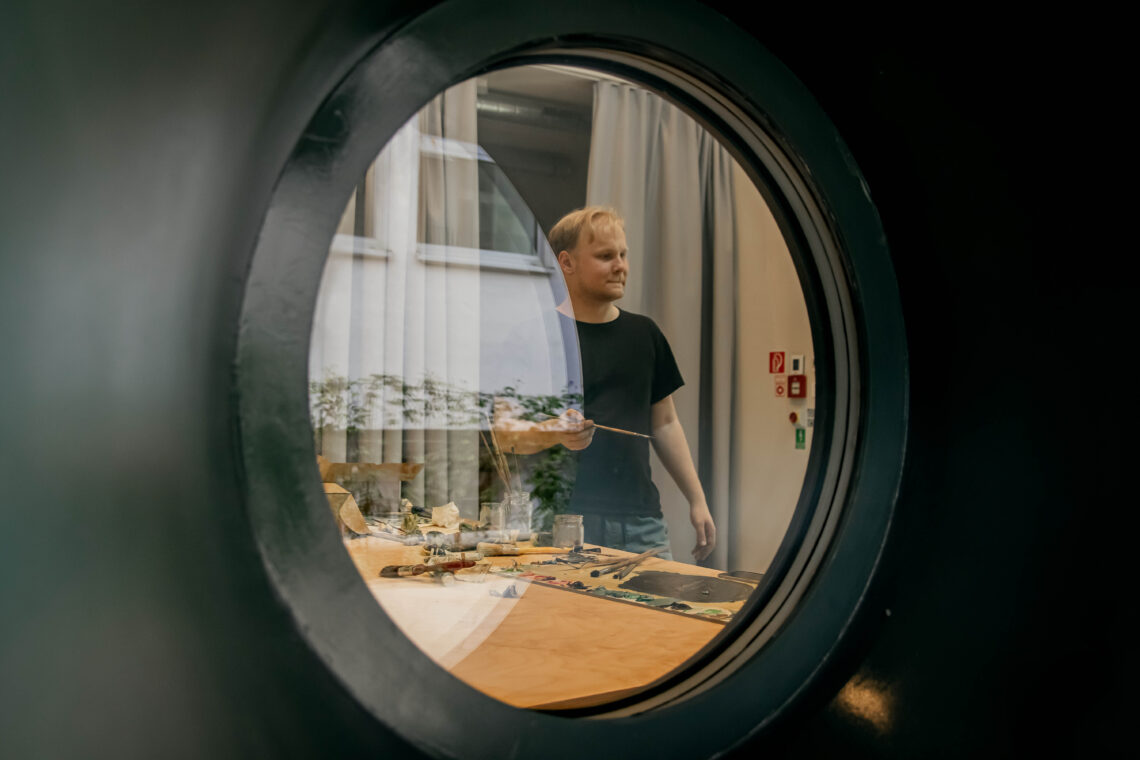
Can you tell us more about what you do in the studio, what you are working on?
Well, I’m actually a contemporary artist and painter. I usually work on big artworks and do a series in which I reflect on the topics I’m interested in. Now I’m working on the theme of loneliness and emptiness in which I’m reflecting on my social life and a little bit of the political situation in my region. First I started to work on some sketches in Minsk and arrived with some ideas and also I’ve done some sketches here. Then I started to paint my sketches on three big canvases and I will show them in the Open art studio.
If I’m not mistaken, you also found new friends at Nádvorie. How do you like this kind of socializing?
Yes, I met a lot of people in Malý Berlín and Kubik. Now I spend most of my time with people from Kubik because they are very close to me. Some weeks ago they invited me to a concert that they did and now I usually spend time with them.
We go for a coffee and smoke and I have a lot of interesting conversations. I can say that they are very kind and cute guys. But also I talk a lot with my coordinator Soňa and Lívia from Malý Berlín but unfortunately they are very busy. It’s cool that I also have conversations with Lívia in Polish to practice, because I’m learning it now.
Soon we will have an Open studio event here, where anyone who is interested in seeing your work will be able to meet you. Will it be a departure from your comfort zone?
It is an interesting question because I am always in the middle between being an introvert and being an extrovert. But also this is not my first experience in doing these events and I am always ready to have a lot of conversations with different people. But what I’m definitely awaiting is a quick coming and then quick leaving of positive emotions. This can happen even when an event is still going on.
Are you looking forward to this event?
I like the openings of exhibitions. Here I can meet a lot of interesting people. It is an artistic tradition and it’s very interesting for me to do it elsewhere that in Belarus or another country, I mean Poland and Lithuania, where the exhibitions are mostly attended by Belarusians or even only by them. Of course I’m looking forward to this experience!
Will you be preparing for this event in any special way?
Hmm, here I can say that all of this preparation is usual – music, wine, well hung paintings etc. It is the people who make this party really interesting and attractive, just people.
Tell me, how did you get here, to the residency organized by Malý Berlin?
My friend just sent me a link and I applied. But what I want to say is, that I was not expected this veeeeery huge amount of a different activities, concerts, events, etc. I admire it a lot! And also I want to thank you that there are still a lot of opportunities for Belarusians – I am really happy about it.
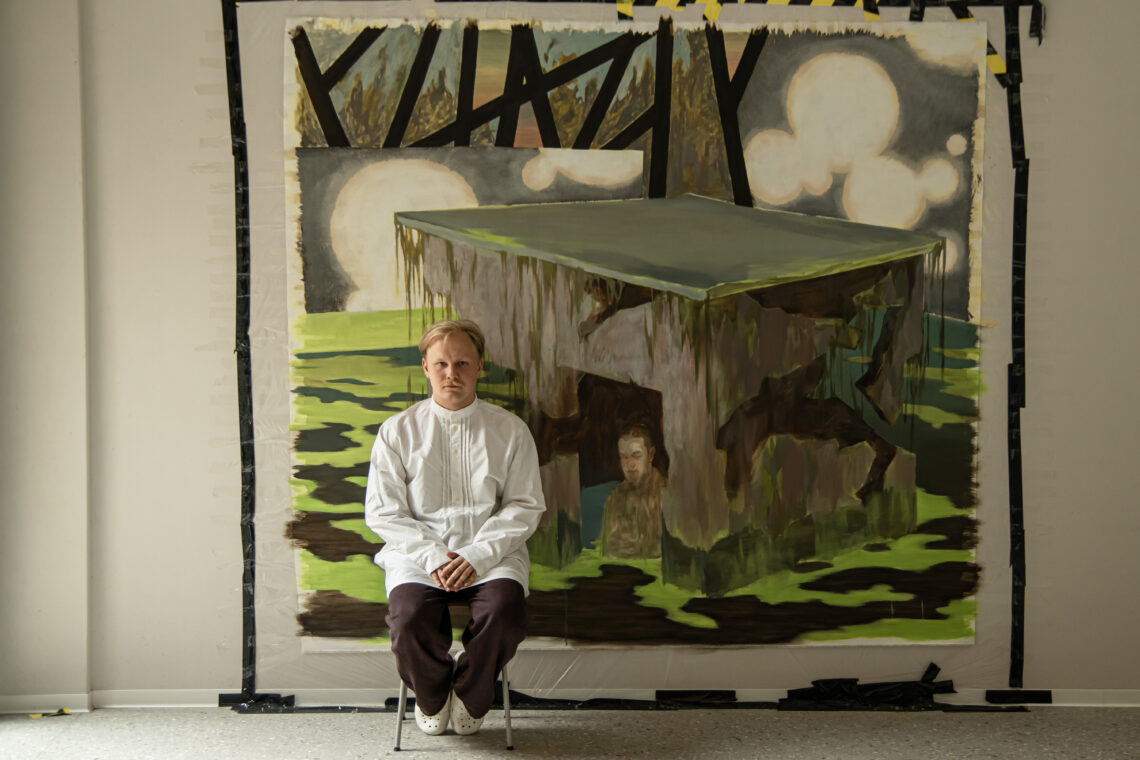
What did the two months spent in Trnava bring you?
Before this art residency I had never been abroad more than for a week. I feel a bit like an emigrant and feel everything that emigrant feels – language barrier, culture differences, climate differences… Some of these experiences are tragic and some are funny but it allows me to fully feel life and what is important for me is to fully concentrate on my artwork.
What was the purpose of your residency? Were you able to fulfill it?
The purpose was to paint some new works – now I’m at the end of fulfilling them and to make some experiments in my working process – that I’m not sure that I can fulfill. But the most interesting thing for me is to look for new acquaintances, wherever I go. It is not the most important purpose, usually it is the default purpose but when it happens a lot of energy comes to me and helps me also in my work.
In the past, Serafím was a student of graphic design, later he decided to be an independent artist. When he was 17 years old, he held his first exhibition at home. He studied at the Belarusian Academy of Arts. He came to Trnava for a two-month residency, during which he creates in a studio in the Nádvoria complex.
Ján Janočko Photo: Lívia Martvoňová
For a three months, Hanna Palei from Belarus was a part of Malý Berlín. Read about what she worked on during her time here
Few days ago we said goodbye to another resident on Malý Berlín. This time it was Hanna – cultural manager from Belarus. We talked with her about her work, last exhibition at Čepan Gallery and also about her plans after the residency.
I usually ask people about their projects and how they liked their residence. But first of all, I want to ask You – what will You miss the most, when You leave?
The opportunity to work freely, calmly in a supportive atmosphere on my project.
What did You miss the most from Belarus here, during your days in Trnava?
I would say that I generally miss and experience great pain, tragedy and loss from the loss of my project, which I have been developing for the last 4 years in Belarus since 2018. This is an independent cultural space pershykrok.by which united many art enthusiasts from the regions of Belarus and helped implement cultural and art projects. It has been a space for discussion, for lectures and for independent art projects, and in recent years a space of support for the local community.
The exhibition in Čepan Gallery is still actual now. Can You describe more about your work with artist Emília Rigová? What did You do for “zredukovaná”?
This is a very symbolic work for me. My acquaintance with the contemporary art scene in Slovakia started with visiting the exhibition Untitled, which Emilia presented at the Synagogue in Trnava. Then I was amazed at the ways the artist works with the theme of Roma culture in Slovak society. And it so happened that my last week in Slovakia we jointly opened the exhibition “zredukovaná”.
At the exhibition I act as a curator and author of texts. During the residency, I studied a lot of the artist’s practices, her work with memory, with the theme of the Holocaust Roma. Working with memory has a special personal meaning for me, because in my country history is being rewritten right now and what was historically true for another three years becomes prohibited. People are recognized as enemies for having a different political view.
Therefore, I have deep respect for the topic of historical memory and rethinking and the work that Emilia has been doing in her artistic practice for many years. After all, without understanding and forgetting the past, it is impossible to move into a better future.
How did You like this experience – I am talking about work with Emília but also the topic of exhibition.
Firstly, I was lucky, thanks to Emilia, to become part of the performance as a viewer. And it’s a really impressive and important experience for a curator to be part of the process.
Secondly, but more important for me, was the topic that I encountered in the process of observation and preparation for the text. It seems to me that this state of the borderland, which I caught, and this is my personal state now. Now I have a feeling of uncertainty and borderline and I wonder where I am now, who I am in a new space and country. Such a process of searching for identity.
Working on this exhibition was not the only thing you did in Malý Berlín. Can You please tell more about your work here?
While working in Maly Berlin I had the opportunity to work on the development of my project. Now with my team I am developing a CultTech startup in the field of education maramora.co – a platform for the education of people not involved in art, with online courses, guides and texts for everyone who is interested in art as a means of overcoming trauma and crisis situations.
Thanks to the self-directed residency, I had the opportunity to choose the most relevant program for my professional development right now: work actively on a fundraising company for the project, as well as develop partnerships with cultural institutions in Slovakia. For example, together with the maramora team and Maly Berlin we have prepared a guide to Slovak independent art spaces for international collaborations:
https://www.maramora.co/media/independent-art-spaces-for-international-collaborations-in-slovakia
And I hope for further partnership with Malý Berlín.
What were the main differences in working in the cultural sphere in your home country and now, in Slovakia?
The opportunity for professional development and the opportunity to work at all and continue my practice is a great joy for me and I would say a privilege right now compared to Belarus. While working in Maly Berlin, I also noted the supportive atmosphere and comfortable conditions and opportunities for professional growth for me as a cultural manager and curator.
What did you find the most interesting during your residence? I am asking about Malý Berlín but also about life in Trnava and Slovakia.
This is my second time visiting Slovakia and for the second time I am surprised that any small town has an independent cultural space, gallery and active cultural life. This is a big revelation and a pleasant surprise for me.
During my visit to Slovakia, I was able to visit Zilina, Pestany, Banska Bystrica, Trnava and Bratislava, Novy Zamky and I met very pleasant and inspiring practices and places that are also open to international collaboration and ready to cooperate. For me, this is the most interesting thing I observed.
Profile:
Hanna Palei (b.1987) is Belarusian cultural manager and curator. She studied European Cultural Foundation program (art management). Her curated projects are about local identity, feminism and living ordinary life in Belarusian context. She is the founder of cultural and educational space in Belarus (pershykrok.by), established in 2018 as a local art actors network for studies and practice of new media. Among her curatorial projects: International festival “Month of Photography” (regional program, theme: Survival, 2020), Series of audio-visual female portraits “Authentic” (2021), Educational art program “Palesse in Focus” (2022).
Photo: Petra K. Adamková

Michal and Guro recorded an album with us – read about the Slovakian-Norwegian residency
This summer, music and horror-like screams could be heard from the main hall of Malý Berlín. Don’t worry, there was no drama, it was just our residents who decided to record new songs for their EP here. We talked about (sometimes really dark!) music with (our old friend and) musician Michal Jahoda and his residency guest, Norwegian singer Guro Kverndokk.
You may have already caught Michal Jahoda’s name in connection with Malý Berlín. A year and a half ago, he spent a few months on a residency here, during which he recorded songs for his previous musical project. After a long break, he returned, with his finished Black Hole Constellation project (part of which he recorded here), and he brought reinforcements to a familiar environment. “I am collaborating with the Norwegian singer Guro Kverndokk on a new EP and I am glad that we can work on its creation in this space,” says Michal Jahoda.

Who is this colleague of his at the residency? “In the past, Guro recorded experimental vocals for The Outsiders Saga II as a guest in a studio in Bergen. Due to the very good cooperation, mutual openness to go to the limit of musical abilities and the desire to experiment even in the most uncharted musical waters, we agreed that it would be interesting to make a joint EP.”
For Guro, it was the first experience not only with Malý Berlín, but also with Slovakia. “My experiences with the place and the people are very positive. I had never been here before and to be honest I knew very little about this place. That’s why I didn’t know what to expect,” admits the Norwegian singer.
The pair set up a studio in our main hall. “The space is large with lots of windows, so it’s possible to get air and daylight from the outside if needed. If you need to create your own scene and atmosphere, curtains and other acoustic elements can be used to completely block out light and noise,” explains Guro. In the course of five days during their stay in Malý Berlín, they recorded vocals, choirs, various voice experiments and also arranged parts of new songs. On the last day, they performed for us, the people from Malý Berlín, a small concert with a short demonstration of the creation process.
“We mostly used the time to find our sound, connect elements and build the skeleton of the album. We will now work on it separately in our home countries and hope to meet again at the end of autumn,” Guro hints at their plans. The singer, who also recorded terrifying screams in Malý Berlín that should be used on the album, was quite happy here, never feeling alone in a foreign country. “I consider Malý Berlín to be a very open and inspiring space to work. It can be a lonely experience when you go to work in another country alone, but thanks to the close contact with the people working in Malý Berlín, I didn’t feel lonely at all. The first day I was shown around town and we all went for a glass of wine. I always had someone to ask about everything I needed,” says Guro.
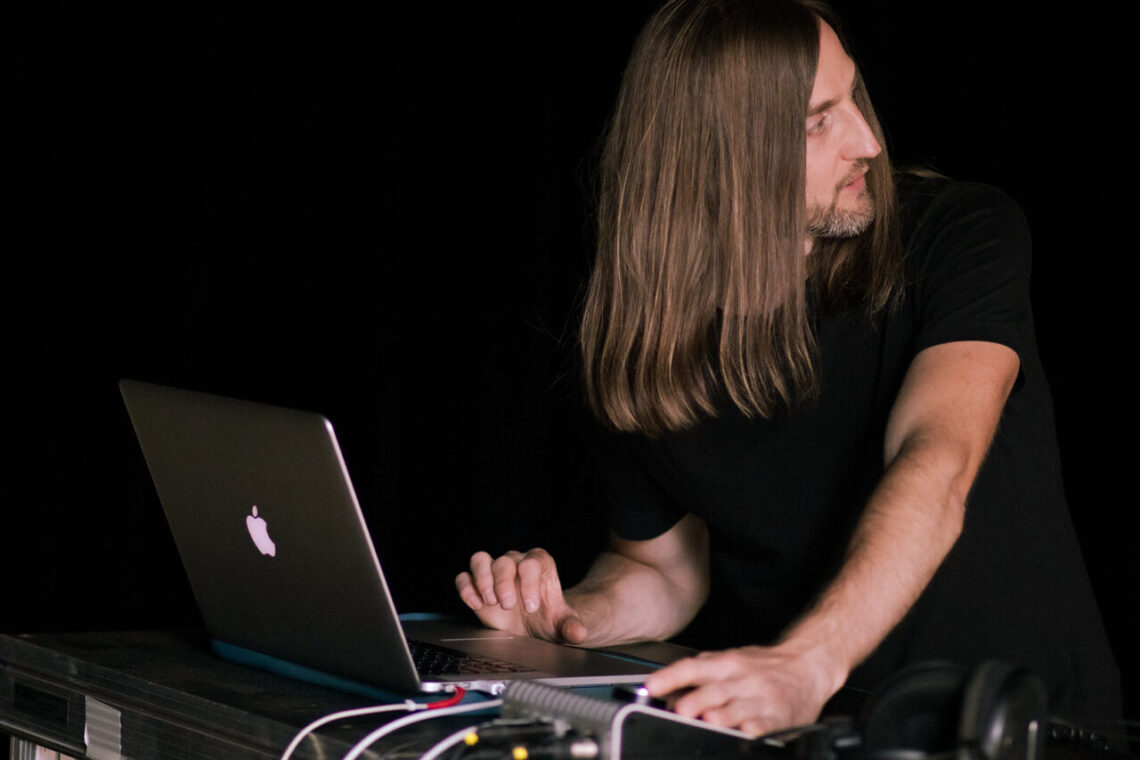
Making an album is a long process. When could we hear the results of the work of Michal and Guro? “If I were an optimist, and we would get the necessary resources and opportunities to devote ourselves to it 100%, I believe that it would be possible to hear it in a few months. Despite the fact that we have a vision and experience, such a creation will require more time, as we want to come up with something we have not heard yet,” explains Michal Jahoda.
Michal, who came up with the idea for the residency in Malý Berlín, had already been to our cultural center in the past. He spent three and a half months here working on his compositions, and when asked if we will ever see him here again, he answered positively. “This place and the people here are still in my heart. So I believe that there will be an opportunity to come back here again.” In a similar spirit, his musical colleague Guro expressed herself at the end of the residency: “I think what surprised me the most was how well everything was organized. Easily accessible resources and a sense of community. I’ve done a lot of coordination work myself and I know how difficult it can be. I am very impressed!“
Photo: Petra K. Adamková

Cavid from Azerbaijan was in Malý Berlín for three months: What did he work on and what attracted him to Trnava?
In the first half of this year, we had a resident in Malý Berlín from Azerbaijan. Cavid was working on a new book and exploring Slovakia. What did he like most about us, what did he learn and what did he take from us?
First of all, I want to know more about your background. Tell me more about your work in Baku and also maybe a story about your university degrees.
I was born on 7 May 1993 in a student dormitory in Baku. Because, my parents were students at the time. I started from Russian-speaking kindergarten and school. But quickly switched to Azerbaijani and English/Turkish language high schools. Such is life in Azerbaijan, we grow up with at least 4 languages! Later I graduated from school in 2010 and went to university in Turkey at the age of 17. Studied Computer Science for a year, then dropped it. Studied Latin Language for a year and dropped that one too. My third study was English language and literature, but it was boring – because I already knew most of it. So I dropped it too. At first I felt that I lost my 10 years of just partying, hanging out and playing games. But truth to be told, these professions weren’t really my jam. So I became a journalist! I have been working as a journalist for over a year now.
But alongside it, I am a member of VarYox, an art collective. In my country, getting involved in art and staying neutral is too hard. Since the government essentially controls the art sector through the Ministry of Culture, we had to improvise and register as a company, instead of an NGO or non-profit organization (requirements are just too harsh). It hindered our efforts to get grants, but at least we managed to organize concerts, festivals, exhibitions and art residencies throughout our 5 years of existence. It was through TEH Easthub – a network VarYox is a member of – I arrived at Trnava.
What was the first “poke” to go abroad? And why did you choose Slovakia and Trnava?
This wasn’t my first rodeo. I travelled to France, Sweden, Hungary, Germany, Greece before, but never Slovakia. I saw a volunteership program announcement at first, published by Malý Berlín. I applied, but was told that I was overqualified (another way of saying I am getting old, lol!) So I got a 3-month residency program instead (more on this later). But for some reason, Slovakia isn’t the first choice for Azerbaijanis when they go abroad. I think the reason is Slovakia doesn’t really advertise itself in our country. I chose Trnava because I immediately grasped the privilege of living in one of the most historically important cities in Europe. I think this is a privilege that even people in Slovakia take for granted. Our countries were part of the same economic system for decades. One can especially see it in Družba – a very socialistic name and a place where you can still find socialist style murals. „Czechoslovakia“ was the brand name for quality in my part of the world back then. My father still refers to this country like this! My mom even said I should learn some Russian before coming here. But the times have changed, as well as the borders.

What exactly were your goals? Did you work on some projects?
In comparison to Baku, Trnava is a small city – which makes it less chaotic in my eyes. I wouldn’t like to live in Bruxelles, for example. So many people, always making noise and hurrying somewhere. Trnava was a place of peace for me. An ideal place to take your time to write articles and books. I have written dozens of articles already, but my biggest aim is to translate a book. I spent most of my time translating “Caucasian Albania – An International Handbook”, an upcoming book authored by Jost Gippert and Jasmine Dum -Tragut to Azerbaijani. Caucasian Albania is a modern exonym for a former state located in ancient times in the Caucasus: mostly in what is now Azerbaijan (where both of its capitals were located). We still have the Udi people, who regard themselves as descended from the inhabitants of Caucasian Albania. However, its original endonym is unknown. By the way, do not mistake it for Albania in the Balkans, they are not related to this. Unlike Albanians in the Balkans, Albanians in Caucasus spoke a Caucasian language that was written with 52 letters. It was one of only two native scripts ever developed for speakers of an indigenous Caucasian language but was lost for centuries, only to be rediscovered in 2003, in a remote Christian monastery on a mountain in Egypt.
What was the most interesting thing you experienced here?
Churches! Or, abundance of churches! As a person interested in Caucasian Albanians and their religion – Christianity, I am a frequent visitor of churches. But you have to spend at least 2 weeks to visit all the churches in Trnava. Being from a culturally secular but traditionally Muslim country, the city certainly painted a different landscape for me. I was somewhat in an alternate reality.
Have you experienced some “cultural shocks”? Did anything surprised you so much you could not believe it?
I didn’t know that Slovaks call their language “Slovensky” and their country “Slovenská republika”. Then I met some Slovaks who complained about always being mistaken for Slovenes of Slovenia. I often joked – “what did you expect when you call yourselves Slovenky?” Yes, it might not be a cultural shock, but it is one of those facts that you don’t know unless you get to learn a bit of Slovak language. But frankly speaking, there isn’t much to be surprised about. Geography was my favorite subject at school!
What did you learn here? Did you learn something you will use in your work or life after coming back to Azerbaijan?
Where do I start? I picked up Slovak a little bit. I learnt how to effectively shop for food – if I decide to come back to Europe sometime later and maybe even settle, it will be useful. I also know how to travel easily, fast and cheap – as a travel enthusiast, it will help me plan ahead my other trips and seek fine deals. I also observed how the Malý Berlín team dedicates their entire day for planning events, always trying to be on top of everything. But they also know how to have fun and don’t turn into a complete office plankton. I also used my time here to attend as many music concerts as possible – famous bands usually don’t visit Baku. But I intend to change it! Trnava was also a fine base for me to travel and meet many professors, scholars who were interested in my country and subjects IN research.
I will probably continue my translation of the book even after I return to Baku. Because 3 months aren’t enough for complete translation and proofreading of a 700+ page book! Also we know how publishing houses can be grumpy about everything. Overall, these three months were one of the best chapters in my life that I will cherish forever.
Photo: Petra K. Adamková