Category: Nezaradené
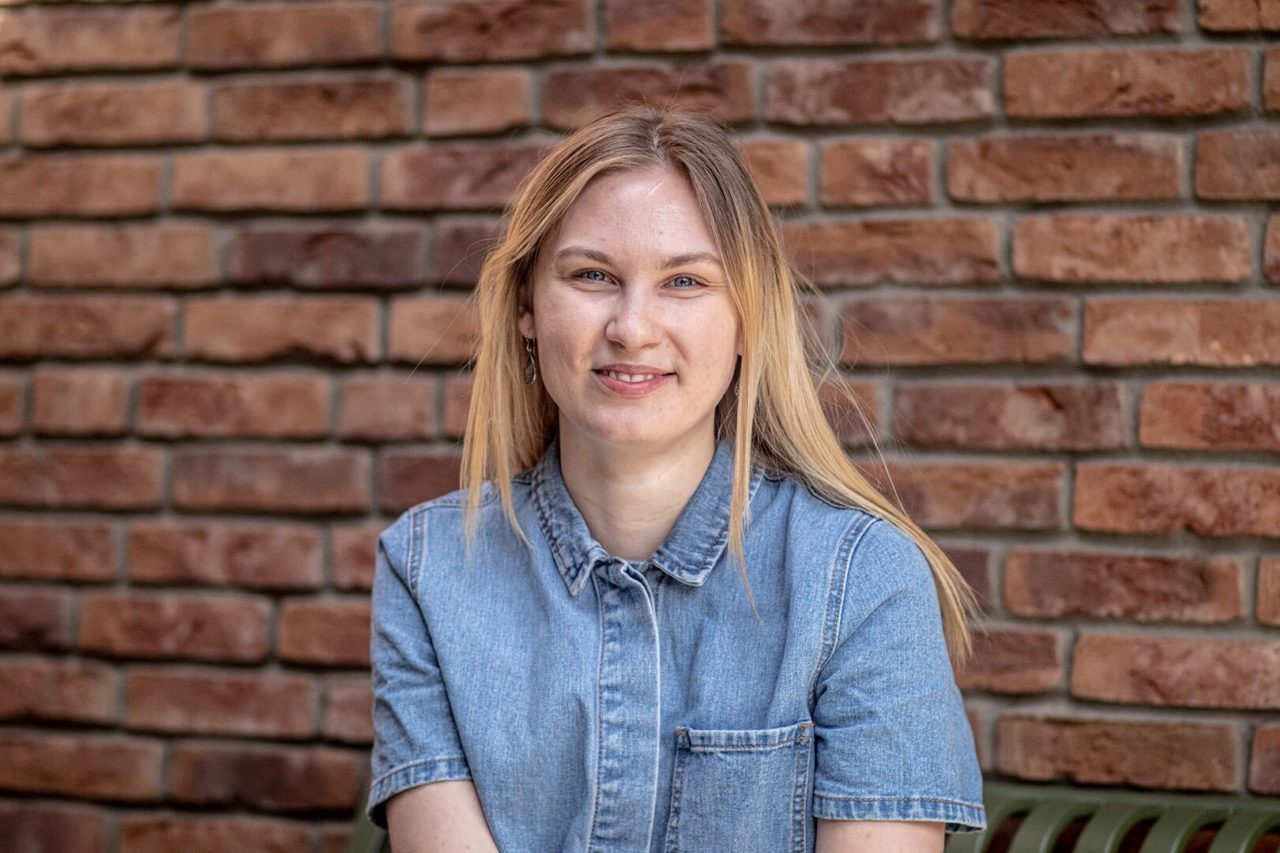
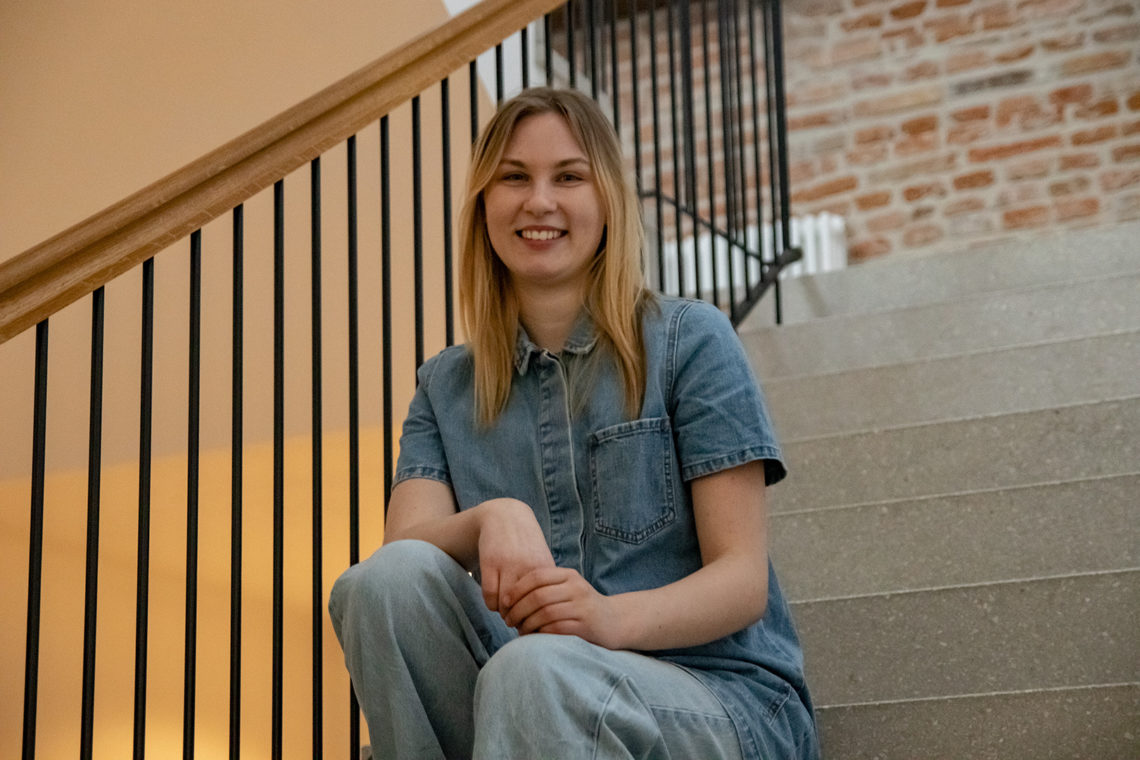
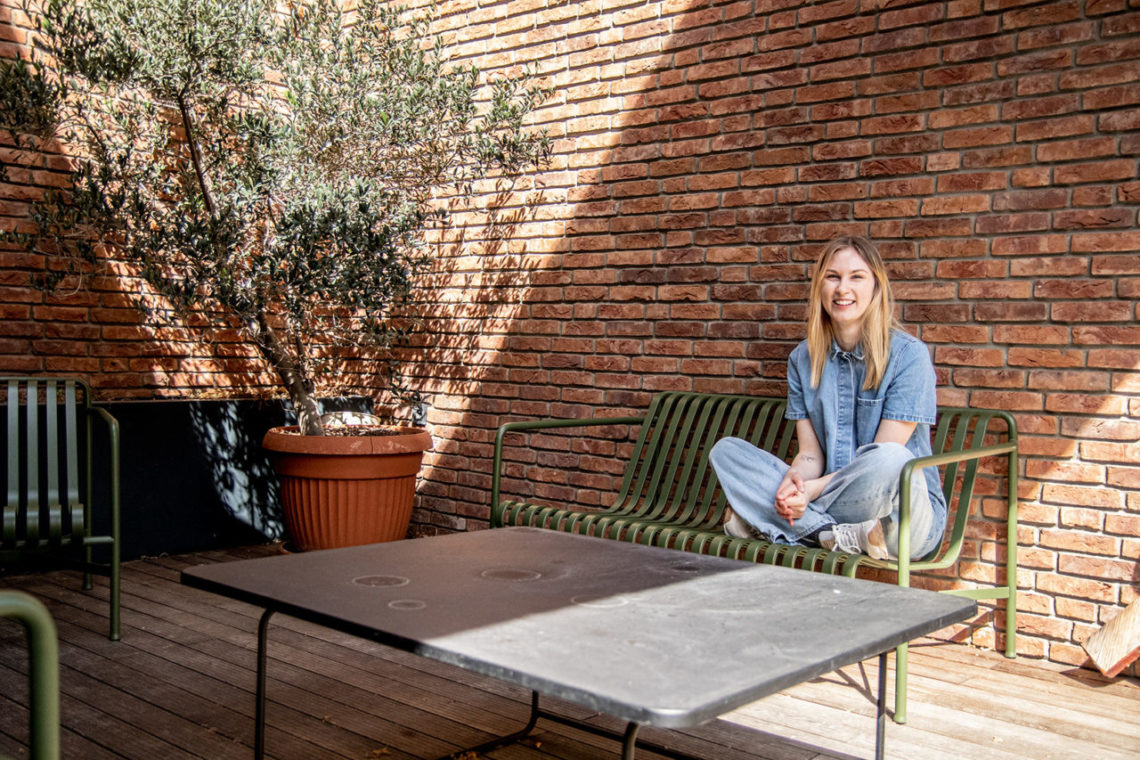
Swedish volunteer Rut spent six months with us. What interested her the most in Malý Berlín?
You could meet Rut at our events for half a year. In addition to her work, the Swedish volunteer also enjoyed many new experiences and surprises that her stay in our cultural center and Slovakia in general brought her. She reveals more in our interview.
Rut, you are were for almost half year. Can You describe this Slovak experience in one sentence?
I would say it has been an incredible experience I never thought I would experience.
And now – can you tell me more? How did you like it here?
I have really liked my stay here, and It’s been so amazing to see and live in another culture and country I never really thought of visiting before. I feel that I have met a lot of interesting people not only from Slovakia but also other volunteers from other countries which has been very interesting and fun. Also learning more about myself because I have never lived in another country this long before, I think it has been a really cool experience. Additionally, I really loved Trnava as a city, it is so nice, and I really feel a little bit at home here. I love all these beautiful churches, cafés and old buildings.
Can you compare your expectations with reality? What surprised you the most, in good or bad way?
I think the language surprised me the most in Slovakia. I have never come into contact with this kind of language before and thought it would be easy to learn, but it was a surprise to find it so different. Both good and bad, because the language sounds beautiful when people speak it, but it was really hard to learn. The people and the community also feel much more supportive than in Sweden. People in Sweden are very individualistic and do not talk to anyone unless they have to. Here I have the feeling that people help each other more in everyday life. Even though I have the feeling that people here are a bit shy towards foreigners at first sight, people here are very friendly.
Tell me more about your routine in Malý Berlín. What did you do?
My responsibilities at Maly Berlin usually include helping to take photos and posts on social media for various events, as well as helping to create posters and working around events and activities. For example, we had a Scandinavian film festival at Maly Berlin, and I was able to help select some films and participate in different ways. I also write down interviews with emerging artists and creatives. These interviews are then later published on the Maly Berlin website. During my stay, I also have several projects of my own. For example, I did a discussion with the Malý Berlín team about the Swedish author Astrid Lindgren. On the side, I am writing an article about Swedish brands, especially smaller independent design brands, and the Swedish/Scandinavian way of thinking about design.
Which events did You like the most?
Because I have an interest in for example dance and music, these have been my absolute favorite events to experience in Maly Berlin. For example, there was a fantastic dance performance by the local dance school Alegria which I really liked and that just made me want to go take a dance class myself. But also all of these amazing Slovak and Ukrainian bands and artists which I found very different from Swedish artists and music, that was fascinating.
What was the most interesting experience during your residence here?
I think it must have been going to the High Tatras. Everyone was telling me it was a must-experience and that I just had to go. It was, I think, the most amazing experience. We were hiking in these incredible mountains, and I feel like I got to see the other side of Slovakia, the more eastern side, which I never visited before. I was for example taking a bath in this hot springs, which was amazing, and I didn’t even know they had this in Slovakia.
What did You learn? What have these six months in Slovakia taught You?
Well, I have learned a lot about working in a cultural space and center, and how much people appreciate visiting it. It is so incredible to work with all these different artists and see what they are so passionate about. I feel like every event or workshop I have been to was very inspiring, and it is amazing that there exists this kind of space for everyone to showcase their art or music etc. Also, I learned a lot about Slovak culture, food and language. I have tried halušky for example and even made it when I was visiting High Tatras. I feel like they have a lot of good liquor, and wine here, and also great honey and cheese.
How about the Slovak language? Did You learn some phrases, words, maybe sentences?
I really tried to learn as much Slovak as possible during my stay here, but it is a really difficult language because of differences to my own language. Swedish is much more similar to, for example, German language, so this was a totally new experience for me too. But I learn the basic phrases, for example when I go to the shop and ask for something or say „here is my card“. Of course, I can say things like goodbye and the different ways to say it, like „Čau“ or „Dovidenia“. And also „Dobrý deň“ and more different greeting phrases.
Did You reach your goals You wanted to reach before You came?
Yes I think so, my goals for this stay were basically to try something new, and learning about new culture and also working within cultural organization. I think I got the most out of my experience here, and I feel very happy that I could do all my projects and work here that I really like.
Can You tell me three things You will miss the most from Malý Berlín when You will be home?
Of course the biggest thing I will miss is probably the team of Malý Berlín, I feel like I’ve gotten so close with everyone during my stay and I will miss talking to everyone, and also I will miss helping with all the events and meeting Slovak people in this cultural space. But I will hopefully visit again in summer!
Ján Janočko
Photo: Petra K. Adamková
Painter Huba Hőnigh about the Sudoku exhibition: I got the best feedback from a small child
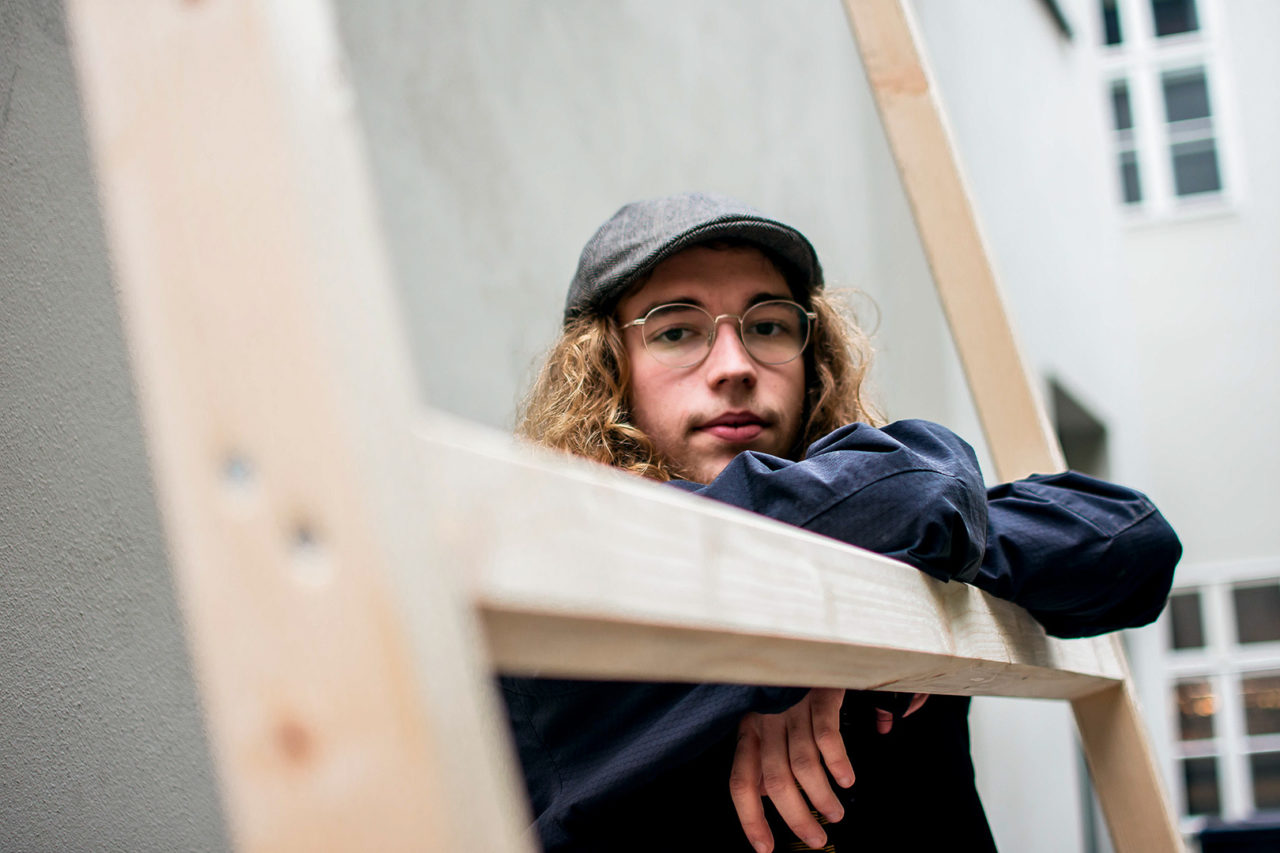
Until January 31, 2023, visitors to the Čepan Gallery (as well as those passing by) can look forward to an exhibition called Sudoku. We talked with the author of the exhibition, Huba Hőnigh, about how Sudoku was created, what preceded it, but also about drawing inspiration from, for example, a visit to Trnava.
How did you and your exhibition get to Trnava?
I got to Trnava by bike, airplane, car, and train. I got to know the opportunity through a painter friend Dávid Merényi, who introduced me to the curator Eva. She knew the Čepan Gallery and got in contact with the crew of Maly Berlín. I had to send her my portfolio, she sent me floor plans of the gallery and I made side-specific plans for the exhibition.
This is your first time in Trnava. How did you like the city, the gallery, and the people that helped you with the exhibition?
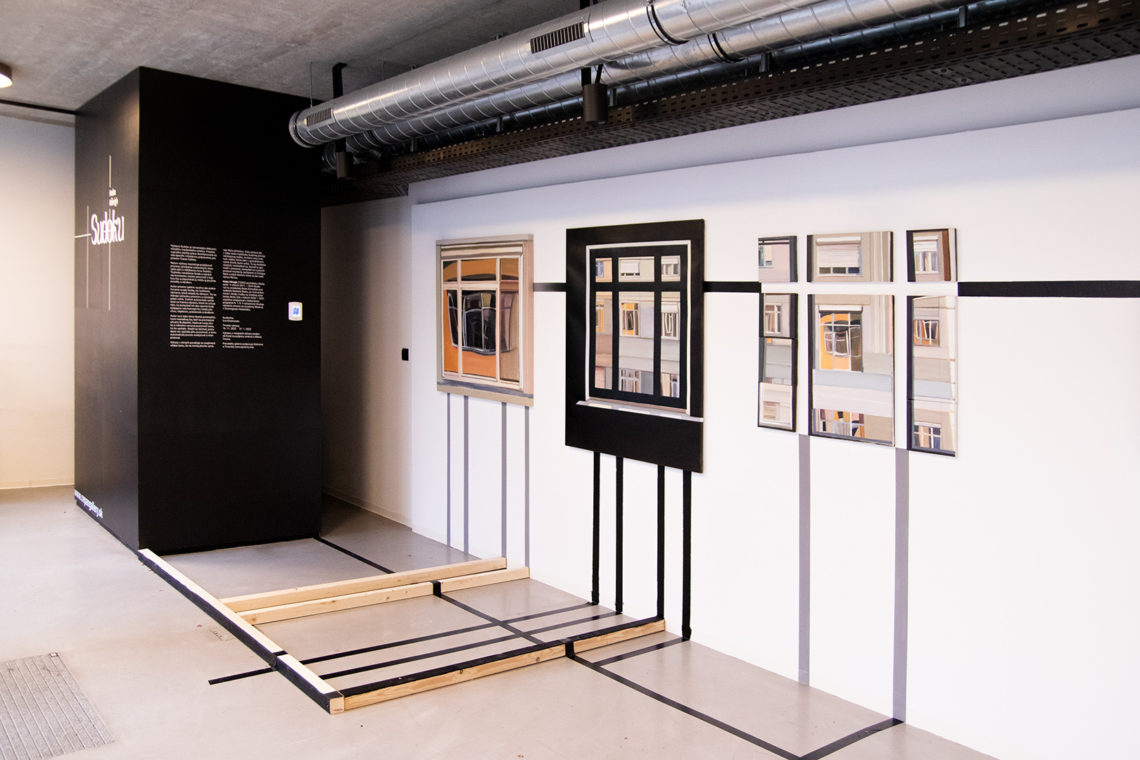
I was amazed, the team was very professional, the 50 meters of wood was already waiting for me in the gallery when I arrived. Everyone was super helpful and if I needed anything they just got it for me almost immediately so I could work very efficiently. I only had to focus on the artistic parts,on the technical part they helped me a lot. I really enjoyed that I was free to do whatever I wanted. I could even use the courtyard to make installations, and also could paint on the walls inside, which was a very good opportunity for me to try out new things. I think we need more places like Maly Berlin.
The tech guys Jozef and Michal were very helpful. One night Jozef was helping us until 1 am. Finding the right spots for the lamps around the courtyard and giving me an introductory lesson to the world of lamps. During the four days of installing, preparing I was in constant workflow. I also found the city pretty interesting, when I had some free time I walked around in the parks.
I took some photos, which I already used in some of my new paintings in Gröningen.The old city wall, the houses, windows were in good condition and gave a very nice view. I got good vibes from the city.
What kinds of feedback did you receive on the exhibition?
I got some very positive ones, both from the audience and the gallery organizers. It was already a good one that everyone followed the opening light-sound performance- that we made with Dani Németh- with great interest. I think my paintings represent traditional attitudes toward art and painting. With the gallery space, the outside, and the light system that Jozef gave me I think that I could mix traditional painting with something contemporary and unusual.
I also got positive feedback about the corporation of young Curators and artists. It is an aspect that should be more in focus I think. Young curators and emerging artists can work together with a great understanding. I hope the opening was exciting and enjoyable and that I could create a bigger unit out of my works in the context of the gallery space. I’m very happy that I got the opportunity to organize this exhibition.
The name of your exhibition is Sudoku and part of the creative process was playing your own game. Was this exhibition meant to be something that can push people to play their own games and look at the buildings in a new way and take more notice of the buildings they pass on a daily basis?
You summarized the main effect that I wanted to achieve with my Blocks and windows series.
The reason why I chose the title Sudoku is because playing sudoku is similar to the process of building up my paintings. For example if I talk about color mixing: I put red in the middle it will indicate that I can not use this color on this part. If I put number 9 in the middle of my sudoku that indicates that I can not use nine in different places.
Who is this exhibition for? I can see that a lot of different people can be interested.
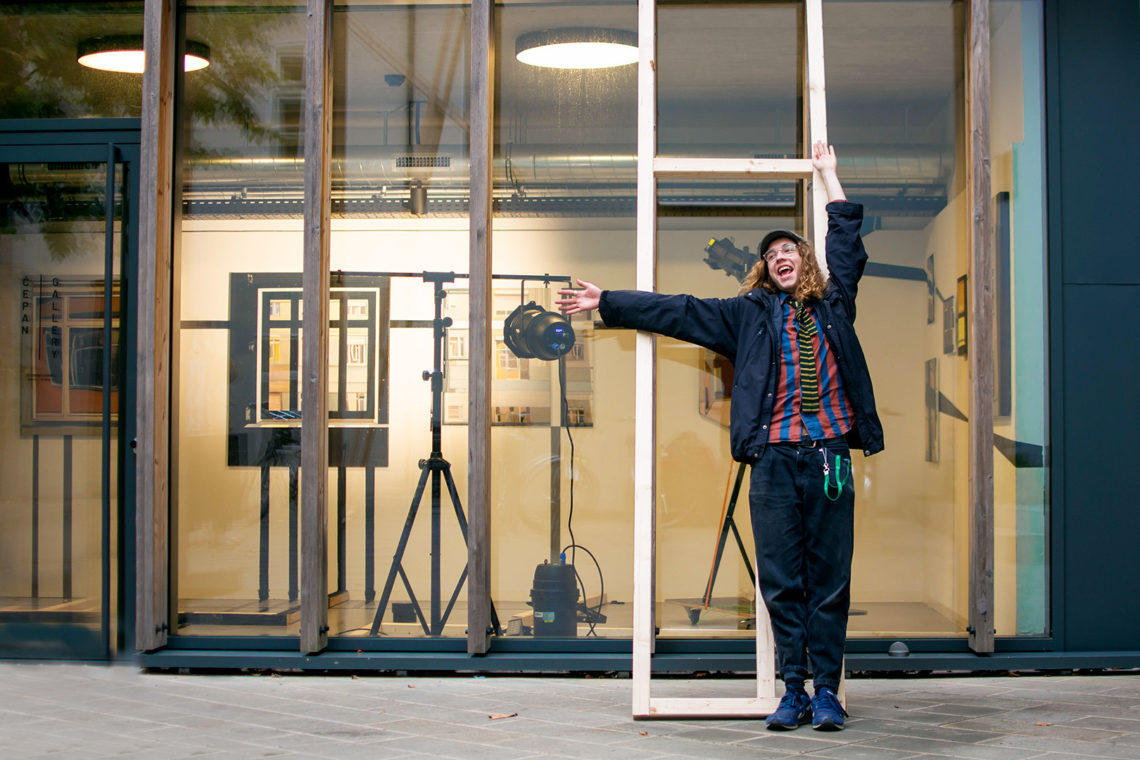
For the older generation the more natural details on the paintings can be entertaining. People enjoy good craftsmanship and technical skills. The main concept was best understood by a small child, who started to play with the installations on the ground just as if he was on a playground. I think this was also the best feedback.
The kid could easily set up games for himself and have fun, it’s a harder task for adults. An exhibition could work as a free playground for the artist, and the viewers as well. In this context the artworks get closer and the experience gets stronger for the audience. I would recommend the exhibition to people who like to get involved in the view during the weekdays. I am searching for an order in the urbanistic landscape that presents a harmony of color and proportion. If you want to see my results, visit the exhibition at cepan gallery.
Do you ever look at the exhibition through a child’s eyes? Can it, maybe, make the exhibition better?
On my way to Slovakia I was thinking about what kind of new things I can try out that I can not do anywhere else. Trying out this unknown is a great play. In a child’s eyes this play presents their curiosity for the surroundings. That’s the act and way of approach that I want to reach. If the visitor can relate to it, it can make the experience more interesting but mainly this idea is important for me and for the making process.
Where do you get your inspiration from?
Looking and analyzing the way I see my environment. Having a walk in a new unknown city can be a good inspiration bomb. I had a few tours at Trnava as well, I might use my photos from here later on. Besides that, visiting exhibitions is also an important part. I think the artists that had the biggest influence on me are: Richard Diebenkorn, R.B. Kitaj, James Turell, Mark Rothko, Richard Serra, Haász István.
Do you ever consider coming back to Trnava and maybe make other exhibitions?
I had a really great time with great people here. I already considered making another performance with Dani Németh as a finissage. For the vernissage Danis sound design, music gave a lot to the experience of the exhibition. Due to the Christmass holiday it’s doubtful we’ll be able to make it for the second time, but I hope I can come back with other projects later on.
Do you have any plans on going to other cities to exhibit your paintings?
Right now I am living in the Netherlands, and most of my new work is there. I am going to show 3 paintings and a metal sculpture on the 2nd floor exhibition in Gröningen. It’s hard to transport work internationally although for now I could carry some smaller ones in my backpack to Trnava. I will have to figure out how it will work in the future. There are some plans for exhibiting at Budapest as well, and I am always searching for open calls, I already applied for some other open calls around Slovakia.
Ján Janočko, Rut Albin
Photo: Petra K. Adamková, Lívia Martvoňová

Oscar Brophy brings Irish comedy to Trnava: What can we expect?
21st november – a day during Irish comedy finds a temporary home in Malý Berlin. With one of the performers, Oscar Brophy, we talked about the specifics of standup from his homeland and why he chose Trnava as the next location for the show.
Why did you choose Trnava to be the place for your next event?
Because it is close to Bratislava and we would like to bring English comedy further into Slovakia. Of course, it is far away so it is like a stepping stone. I think in the future it would be cool if I say to traveling comedians that if you come to Slovakia, you can come to Bratislava, you can come to Trnava, and we can make a little circuit. We would have to make ourselves financially viable. Often comedians will come to Austria – Vienna, Salzburg, Innsbruck, and Prague, and then Bratislava is just a stop on the way. If we can make Slovakia a viable place for comedy, I think that would be cool.
You have already been here, in Malý Berlín, last May. How did you like it?
It was good, but it was weird that everyone had masks on, and it had reduced capacity, so I would like to see the show sold out. You have a nice venue and you are very cooperative and eager to have us back and have me back as well, to make new shows. That is always very nice.
I am really curious about Irish comedy. What makes Irish comedy “Irish”?
The first word that comes to mind is “absurdity”. British comedy is more about irony, but in Ireland, I think we are more about making jokes about silly stuff. Generally, we tend to be a bit silly on stage and make more fun of the oddness of life. There are a lot of different schools. Obviously, I talk about weird stuff. Terry is also very freewheeling, he covers a lot of different topics.
Tell me please more about Terry. I read about him, that he’s the next big star and he is becoming quite popular.
Terry is already headlining basically every show he does. He is headlining in Dublin, Berlin, Prague, and Vienna, and is a very talented comedian. I met Terry 3 years ago on the stage, it was just before New Year in 2019 and we were doing a show in Limerick. I met him the first time online on Facebook, and also when I was doing shows in Bratislava I was trying to get Irish comedians to come over and he was one of them. I got him over at the same time as this other guy called Joe Rooney, who is a famous Irish comedian. He was in the Irish show “Father Ted”. Terry ended up liking Bratislava so much that he lived there for a year, and he met his fiance Jenny there. He is one of my best friends.
So you did not know him from the times you lived in Ireland?
No, we have a sort of multinational friendship. I meet him when I visit Prague, and we hang out in Ireland, like when I was there over the summer. Terry is the tour manager for “Three Bucks Left”. It’s these guys from a tv show aired in Ireland during the early 2000s called “Hardy Bucks”. They are similar to Trailer Park Boys, and they are quite famous in Ireland. Terry is managing their tours across Ireland and the UK and is even bringing them to Vienna and Germany next month at the start of December. He’s just 26 and Terry has achieved a lot. He’s very hard working and he travels loads.
So he will bring the specific Irish comedy and there will be a lot of nonsense, kind of “Kafka stuff” and things like that?
I would not say Kafka stuff, it is more about relationships, sex, Irish Republicanism and being in foreign countries. It is also about being an Irish person abroad, something I relate to as well, and going into things with an Irish attitude.
So, just to be clear, this show is for foreigners or anyone can come and anyone can relate?
Anyone can come. If we were to be in Ireland we would be performing other stuff and different references but 99 percent of my shows have been in different countries, and with a diverse audience including all sorts of people. So you do not have to be from anywhere specific to understand our humour you just have to understand English.
Any last words, any last invites?
It is going to be great fun! Neither of us is working early the next day so I can picture us getting quite drunk after the show. If you want to have the fun of coming and seeing real live Irishmen, maybe you have only heard about us on the news, we are nice people so you can come and have the „craic” with us as we say in Ireland!
Will you tell people how you, the regular Irishmen came to Slovakia and stayed there for 6 years?
I will definitely get into it, I will not spoil anything now, but I will get into my story and how I got here. It does not make sense really. I should not be here, but I will tell you all about it!
Ján Janočko