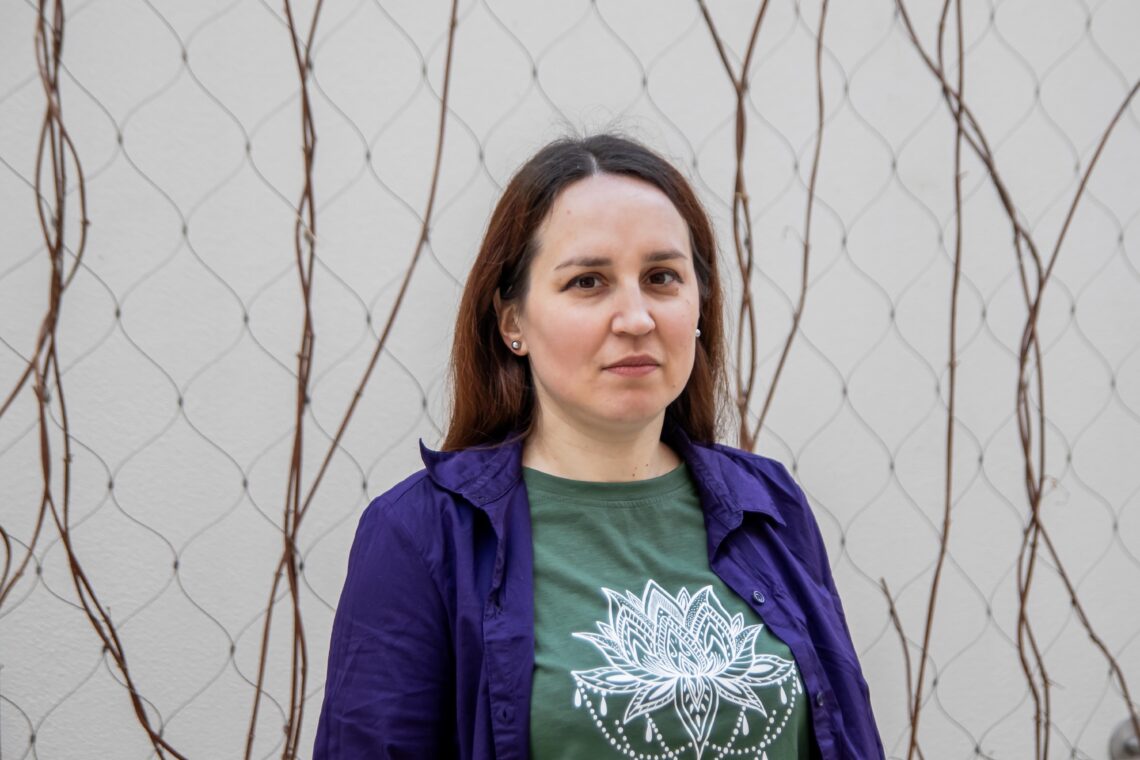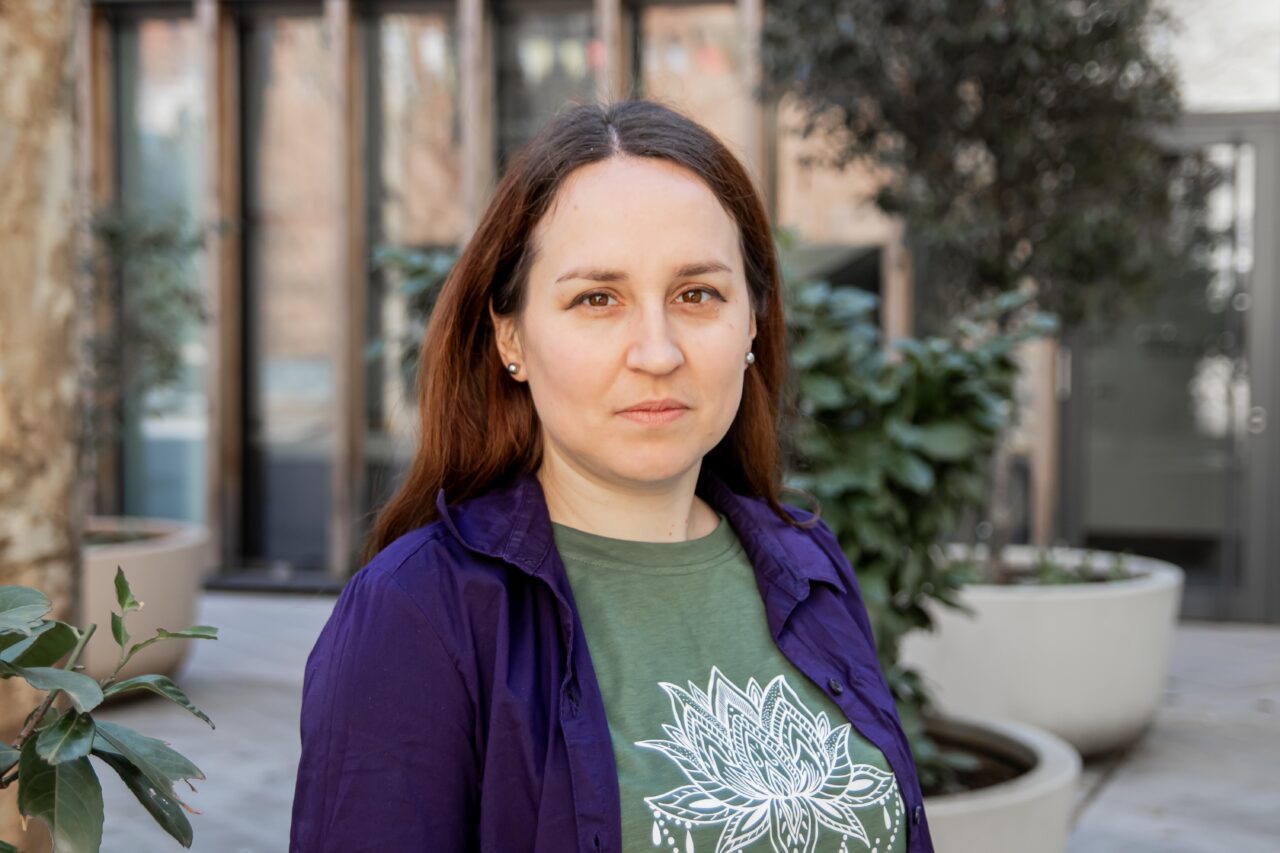
Roksolana Zharkova
Writer, essayist, literary critic
Residency period: March – May 2025
*1992, Ukraine
Writer, essayist, literary critic
Residency dates: March–May 2025
Roksolana Zharkova is a writer, essayist, literary critic, doctor of philology, feminist, and researcher of women’s writing. She graduated from the Faculty of Philology at Ivan Franko National University in Lviv. She has participated in, been a finalist in, and won numerous national and international literary and artistic competitions, and is the recipient of several literary awards. She has participated in creative and research projects in Poland, Slovakia, Latvia, and Sweden. She is the author of poetry collections, short stories, and novels. The author explores the traumatic experiences of women in literary texts, raises questions related to war, migration, and refugees, and analyzes the problem of borders in literature and art.
Residency goal:
“During my stay (March–May 2025), I got to know the city of Trnava and its cultural and artistic life. I participated in cultural events held in Malý Berlín and at the Juraj Fándly Library in Trnava. It was a great pleasure to meet Slovak authors: Oľga Gluštíková, Mirka Ábelová, Ružena Šípková, and Eva Luka. The work of these women made a big impression on me. During my residency, I had several public events:
A discussion with Ukrainian writer Roksolana Žarková in Malý Berlín (Trnava, April 6),
A creative meeting at the Ukrainian Library of St. Barbara Parish in Vienna (LiterAktiv, Vienna, April 2),
Creative meeting at the Ukrainian School in Bratislava (April 11),
Creative meeting with Slavic studies students at Masaryk University (Brno, April 15),
Participation with poet Olga Gluštiková in the concert Ildikó Kali Nebudem mlčať (I Will Not Be Silent) (Trnava, May 24). It was an important event in support of Ukraine.
I managed to translate two poetry collections – by Juliana Sokolová and Olga Gluštiková:
– Sokolová, Juliana. Domáce práce. Literárna bašta, 2023. – 80 pp.
– Gluštíková, Oľga. Severské mýty. Skalná ruža Publishing House, 2024. – 64 pp.
I also devoted myself to self-education: I read books and magazines in Slovak and studied literature on the topic I was working on during my residency.”
What did the residency give you, and why would you recommend it to others?
“Participating in the residency allowed me to focus on my work, manage my work and rest intervals, and think about my future projects. Studying Slovak women’s poetry inspired me to translate. I recommend authors and translators to participate in residencies because it is an opportunity for self-discovery and productive work.”
This resident was selected in the following open call: